
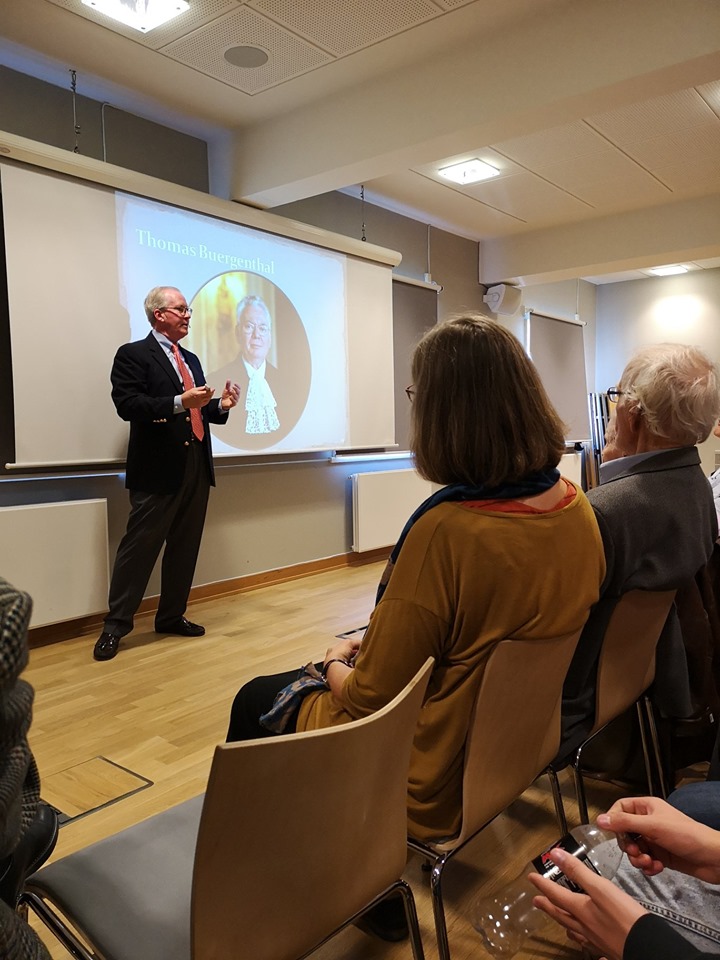
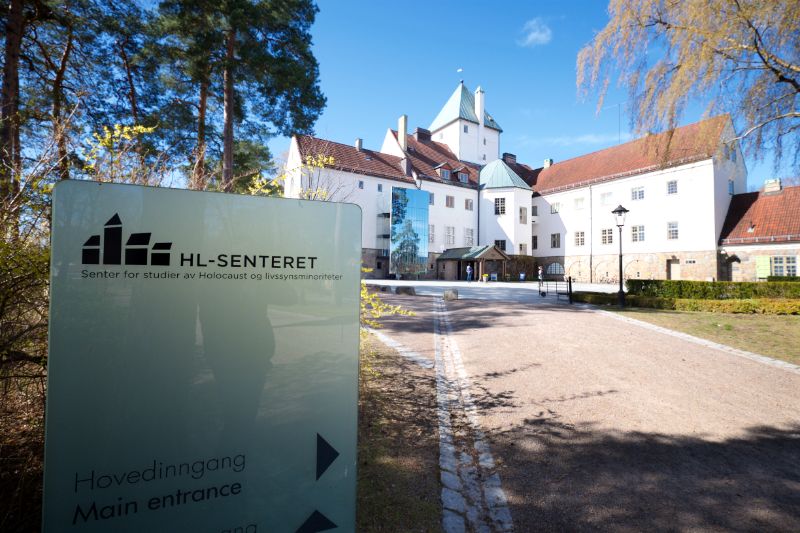
On Sunday, September 15, I had the honor of addressing an audience about Odd Nansen’s diary at HL-Senteret, the Norwegian Center for Holocaust and Minority Studies, housed, appropriately enough, in Vidkun Quisling’s wartime residence located on Bygdøy. The event was co-sponsored with Norway’s Resistance Museum (Norges Hjemmefrontmuseum).
My visit to Norway, as well as the event, were pure magic from start to finish.
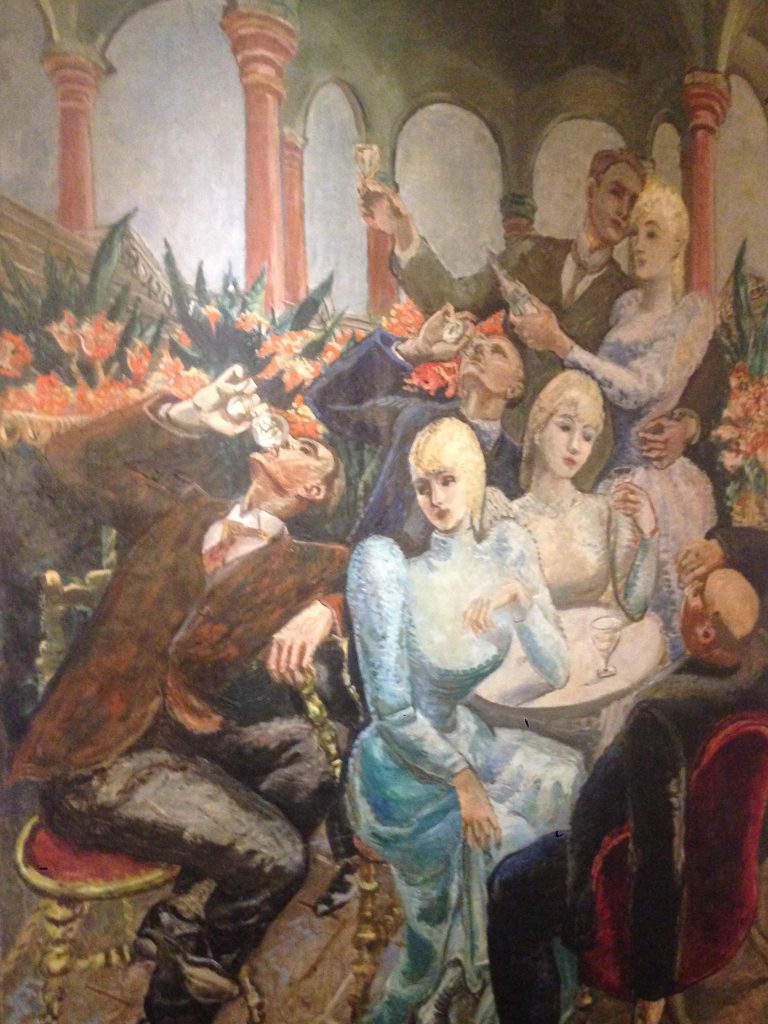
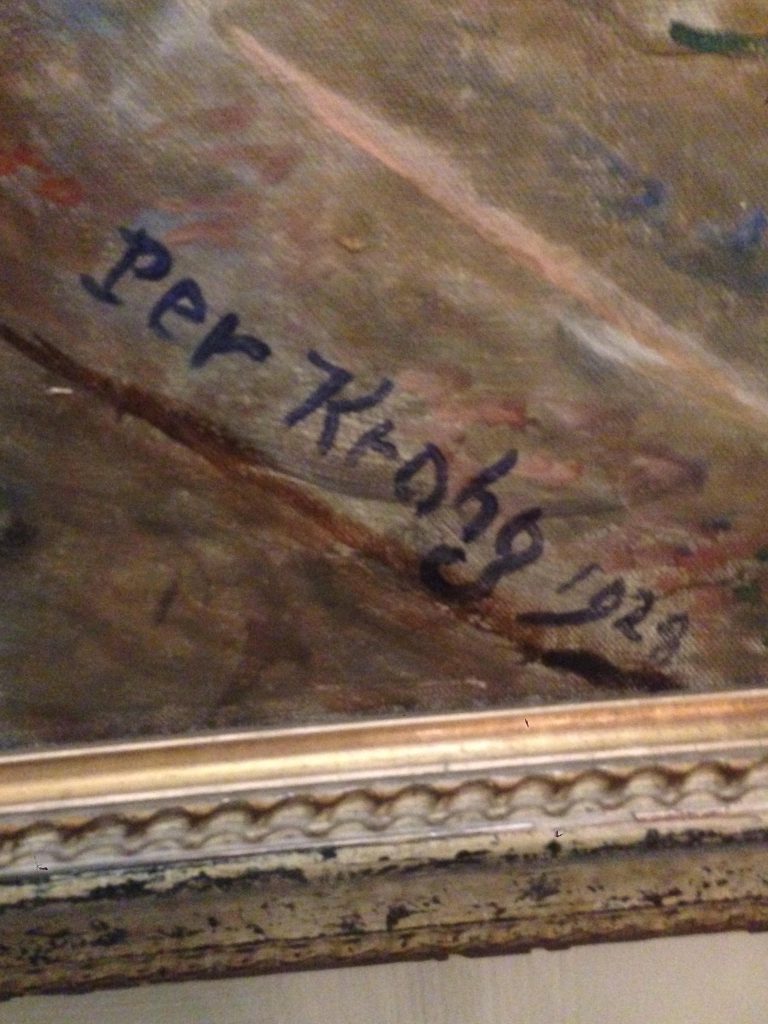
Sunday morning dawned bright and sunny—a sparkling fall day that showed Oslo off at its best. I had had a wonderful sleep (not surprising, having been awake for almost all the preceding 48 hours) at the Grand Hotel, where Nobel Peace Prize laureates stay when receiving their award. My stay at the Grand, I soon realized, was going to be special: While walking up the main staircase to my floor, I gazed upon a large oil painting, which, I discovered, had been painted by Per Krohg, a friend of Nansen’s and fellow prisoner in Grini. I even refer to Krohg in my presentation.
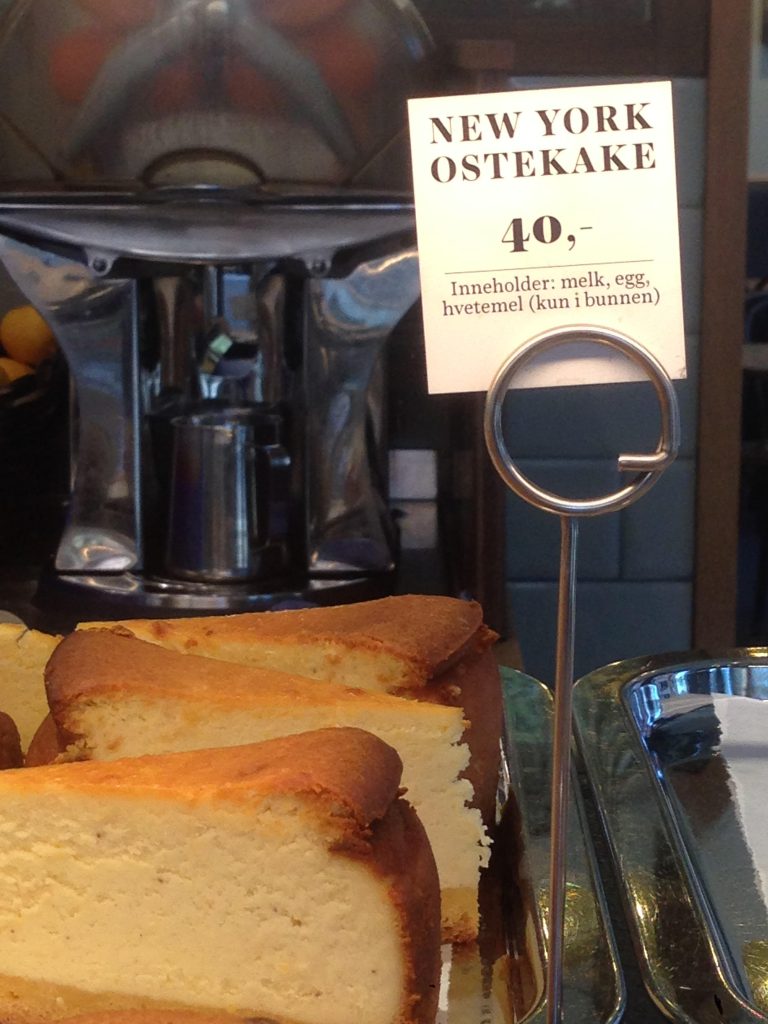
I then set out for a quick breakfast. Fortified by a brisk cup of tea—not the ordinary old English Breakfast—the only offering they had was called Bengal Fire, and a croissant, I was ready for the day. (I did notice that NY cheesecake—or ostekake—had made its way across the Atlantic.)
While walking back to the hotel to get ready, I happened upon a coin lying on the sidewalk. It proved to be a 1 øre piece—the subject of a previous blog post (here), which I took to be a sign of good luck.
I first proceeded to the Resistance Museum, located in the Akershus Fortress complex, to view an underground Norwegian translation of a novel written by John Steinbeck in 1942, The Moon is Down (Natt Uten Måne)—the subject of a future blog. Thanks to Frode Færøy for allowing me to do some research on a Sunday morning.
From there I proceeded to Quisling’s old home, and arrived early enough to receive a private tour of the facility, including Quisling’s private office, still well preserved from his short reign as Minister-President 75 years ago. I very much enjoyed giving my presentation to an SRO crowd. Kari Amdam, Head of Programming at HL-Senteret, began by reading an email from the former head of Norwegian Center for Human Rights, who was unable to attend, but who recalled meeting Nansen as a young boy. “Nansen was a link to a reality, just 10—15 years earlier, filled with so much cruelty and suffering,” he wrote. The full presentation can be viewed here.
At the reception and book signing which followed, I met and spoke with so many interesting people. I once again saw my friend Robert Bjorka, who will turn 99 in November, and who was a fellow prisoner with Odd Nansen in Sachsenhausen. I met the son of Bjorn Bjerkeng, the Norwegian who split the breadboards for Nansen and five of his close friends, allowing the Sachsenhausen portion of the diary to be safely smuggled out of camp. I met the grandchildren of Odd Nansen’s friend and fellow prisoner Eric Magelssen, whose own breadboard is pictured on pg. 559 of the new edition of From Day to Day. I met the son of Carl Jakhelln, another Sachsenhausen prisoner who later co-authored a book of poems about his captivity. I met a gentleman who trained as an architect with Odd Nansen after the war, and for a time lived in a small garage apartment in Nansen’s home. Anne Ellingsen, Nansen’s biographer, was there also. This is but a sampling of the wonderful guests who attended the presentation.
I cannot of course leave out my dearest friend in Norway, Marit Greve, Nansen’s eldest child, approaching age 91, who attended as my special guest along with her daughters Kari and Anne.
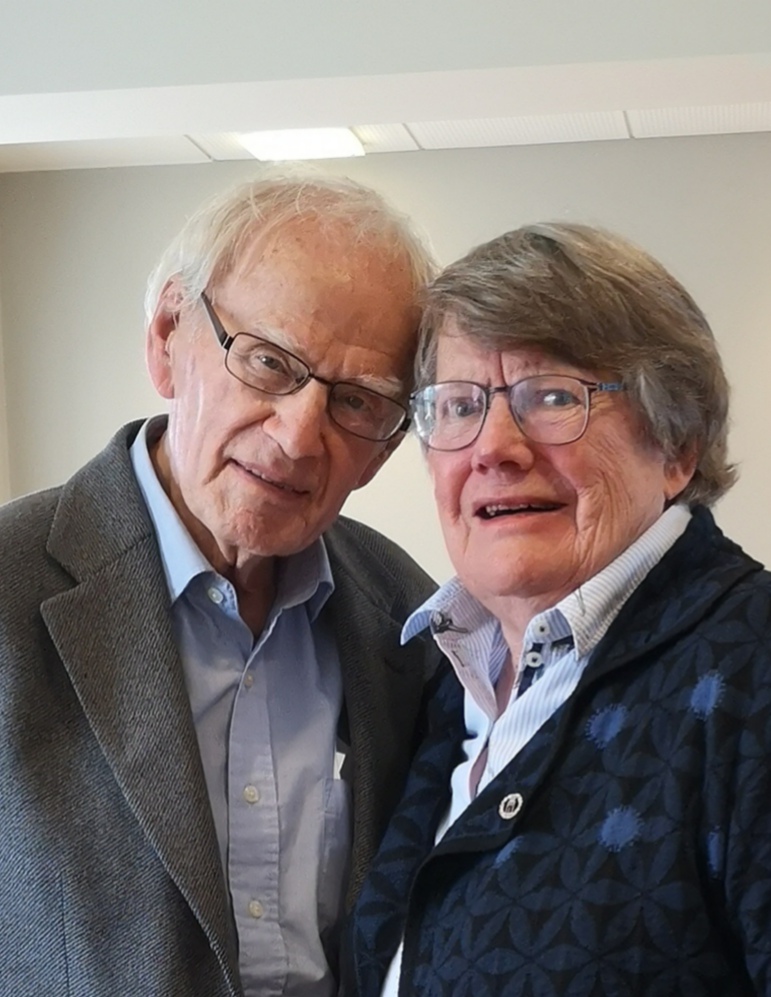
Altogether it was a wonderful and memorable experience, capped off with some champagne afterward in the company of Marit and her family.
More stories to follow!

