
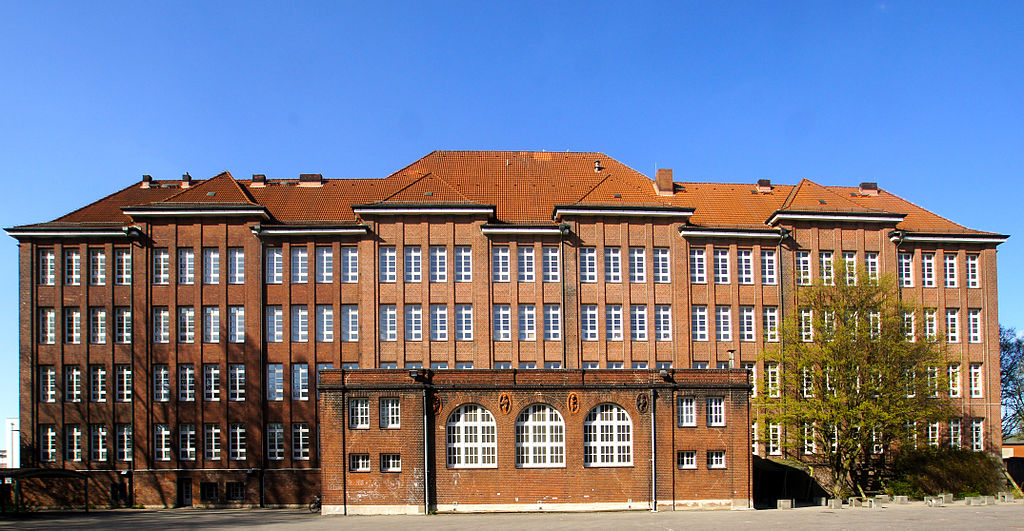
As noted in my first blog concerning Bullenhuser Damm, some, but not all the murderers were brought to justice soon after the war. The evil genius behind the medical experiments on the twenty young Jewish children at Neuengamme concentration camp, Kurt Heissmeyer, somehow managed to escape notice in postwar Germany, and ended up opening and operating a medical clinic in East Germany, unrecognized for almost twenty years, until 1963.
Finally convicted in 1966 and sentenced to life imprisonment, Heissmeyer died the following year in jail of a heart attack. During his trial he was asked why he did not confine his experiments to guinea pigs (which he also tested simultaneously with his tests on the children). His response: “For me there was no basic difference between human beings and guinea pigs.” Then he corrected himself: “Between Jews and guinea pigs.”
As disturbing as this answer is, it perhaps can be chalked up as the ranting of an unreconstructed Nazi. What is harder to explain is the prosecutor’s mindset in the case of Arnold Strippel, the senior officer in charge of the executions at Bullenhuser Damm. After the war Strippel was initially charged and convicted of different murders—which he committed at Buchenwald—for which he received twenty-one life sentences. Strippel served in prison from 1949 to 1969 when his sentence was vacated and he was freed (on retrial Strippel was again convicted, but only as an accomplice, and his new sentence equaled time already served).
In the mid-1960s (while Strippel was still in prison for the Buchenwald murders) an investigation into his alleged role in the Bullenhuser Damm murders was initiated by the Chief Prosecutor of Hamburg, Helmut Münzberg. After a lengthy investigation Münzberg ultimately elected not to proceed with a prosecution. Under German law, a murder conviction required proof that a person acted with a “base motive,” such as greed or hatred, or exhibited sadistic zeal. Author Günther Schwarberg quotes from Münzberg’s official prosecutorial memorandum:
“The investigations did not prove with the certainty that is demanded of them that the children suffered unduly before they died. On the contrary, much can be said for the fact that all the children became unconscious as soon as they received the first injection [of morphine] and were therefore not aware of all that happened to them thereafter. And so, beyond the destruction of their lives no further harm was done to them; and in particular they did not have to suffer especially long, either in body or soul.” (emphasis Schwarberg’s).
In an endnote to his book, The Murders at Bullenhuser Damm, Schwarberg reports a conversation he had with prosecutor Münzberg in 1979, twelve years after Münzberg wrote the above memorandum. “Chief Prosecutor Dr. Helmut Münzberg regretted having formulated this sentence. He was sure he would never write another sentence like this one.”
The end of a series.
Photo source: By flamenc (Own work) [CC BY-SA 3.0 (http://creativecommons.org/licenses/by-sa/3.0)], via Wikimedia Commons

