
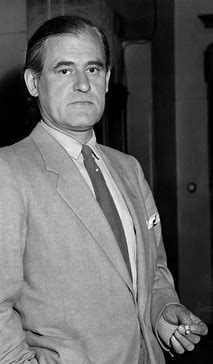
Today is the 119th anniversary of Odd Nansen’s birth.
“What is it in the human character that gives some individuals the moral strength not to sacrifice their decency and dignity, regardless of the costs to themselves, whereas others become murderously ruthless in the hope of ensuring their own survival?” Thomas Buergenthal, A Lucky Child.
That, indeed, is the question. Religion, philosophy, psychology, political science, among other disciplines, have all wrestled, unsuccessfully, to answer this conundrum. Perhaps the answer is insoluble. As historian Barbara Tuchman wrote, in Practicing History: “Whole philosophies have evolved over the question whether the human species is predominately good or evil. I only know that it is mixed, that you cannot separate good from bad, that wisdom, courage and benevolence exist alongside knavery, greed and stupidity; heroism and fortitude alongside vainglory, cruelty and corruption.”
So, if humankind is inherently flawed—good existing beside evil at all times, what steps can we humans take to insure that good gains the upper hand in our ongoing struggle to do the right thing?
My friend, the writer Samuel Hynes, once observed about one of his favorite subjects—war—that it is ultimately a human struggle against human enemies: evil, fear, and death itself. Further, stories of war are witnesses to acts of great courage and self-sacrifice. Equally important, in Hynes’s view, those acts of great bravery—which we recognize as humanly valuable—are “not performed by heroes but by people like us. . . . They are ourselves, elsewhere; and their actions are our extreme possibilities.”
Thus, we may never be able to fully solve Tom Buergenthal’s riddle, and must recognize, like Tuchman, that the capacity for both good and evil exists within all of us. But as long as stories like Odd Nansen’s matchless diary exist and are read, we can nevertheless recognize that Nansen’s actions point the way to our own “extreme possibilities” —extremes of courage and self-sacrifice—and try to conduct our lives accordingly.
Happy Birthday, Odd Nansen.

