Eigil Nansen, the second child of Odd and Kari Nansen, died last week, age 85.
Eigil followed in his father’s footsteps, becoming an architect, and worked in his father’s architectural firm.
More importantly, Eigil also followed down the humanitarian path his father (and grandfather Fridtjof Nansen) had blazed. In 1991 he was awarded the Lisle and Leo Eitinger Prize, given by the University of Oslo to recognize the beneficiary’s “personal effort and active involvement in human rights.” [It is altogether fitting that Eigil receive such recognition. Leo Eitinger was a Czechoslovakian Jew who was assisted by Nansenhjelpen (set up by Odd Nansen) to emigrate to Norway in 1939. One of only a handful of Jews from Norway to survive his subsequent deportation to Auschwitz, Leo Eitinger later pursued a distinguished career in psychiatry.]
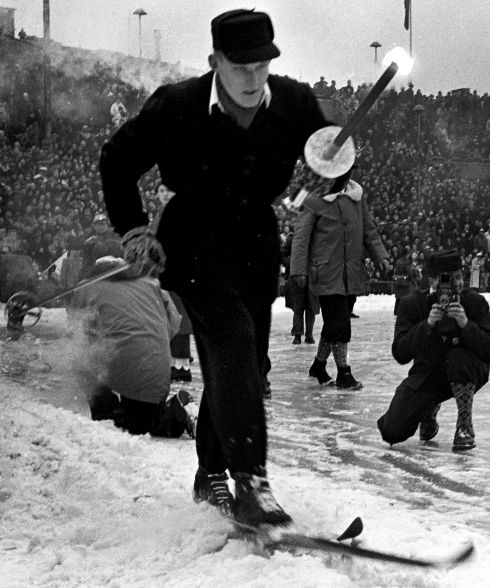
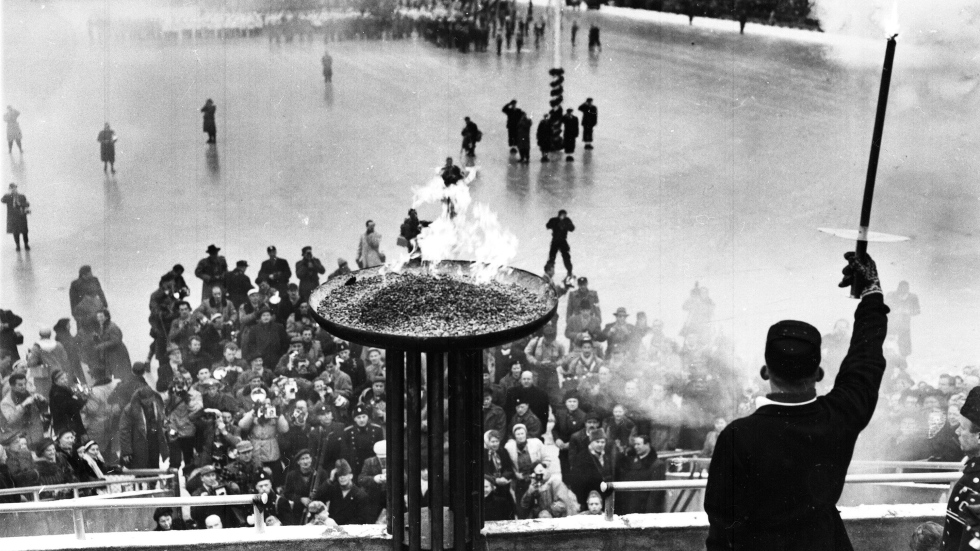
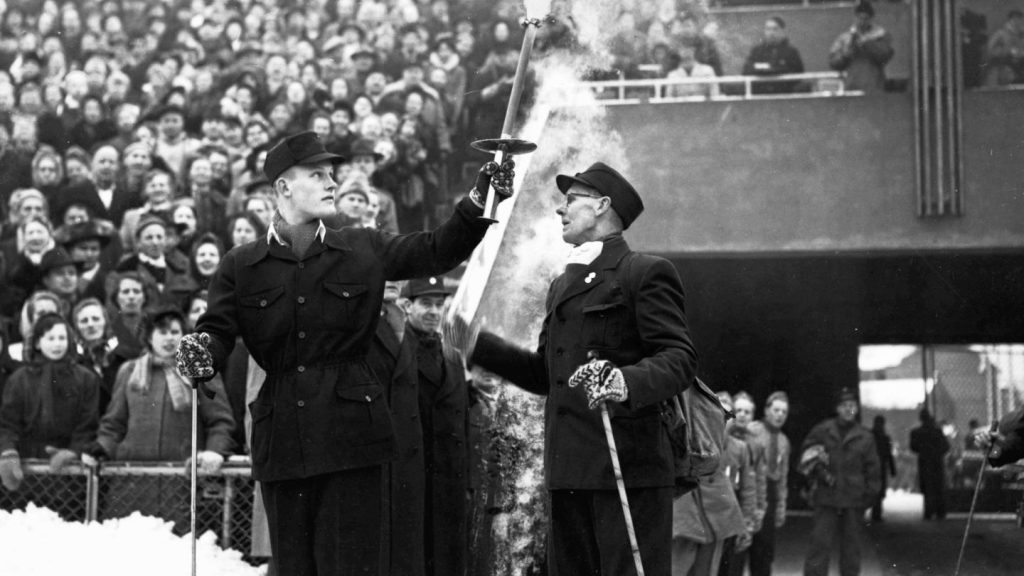
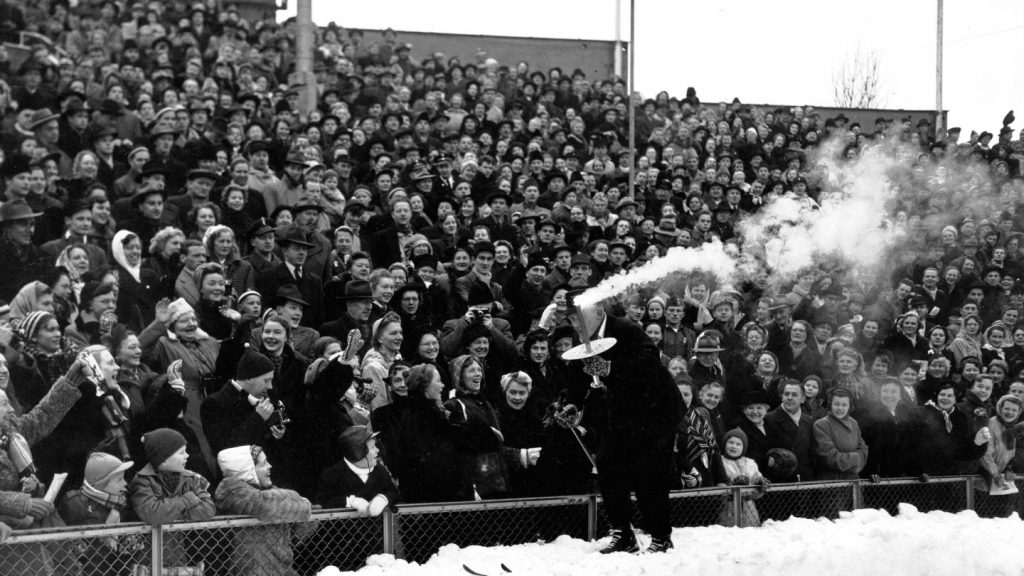
Finally, Eigil played an important role in the Olympics. In the 1952 Winter Games, held in Norway, Eigil was selected to light the Olympic cauldron, officially inaugurating the games. The pictures here show Eigil skiing into the stadium, lighting the flame and holding the torch aloft.
I had the honor and privilege of meeting Eigil during my several trips to Norway. Our final get-together was in a restaurant in Oslo in October 2015, where family members, including Eigil’s sister Marit, Marit’s children, Kari and Anne, Anne’s husband Preben, friend (and Sachsenhausen survivor) Robert Bjørka, Thomas Buergenthal and his wife Peggy, and Nansen’s biographer Anne Ellingsen, had all gathered. At one point during the festivities Eigil raised his glass, looked me in the eye, and gave the traditional Norwegian toast: “Skal!”
Skal to you, Eigil Nansen, and may you find peace in the halls of your ancestors.