
Earlier this month I embarked on my most ambitious book tour yet—a 13-day, 9-stop, 2,942-mile extravaganza that took me to four states (NY, NJ, PA and MD).
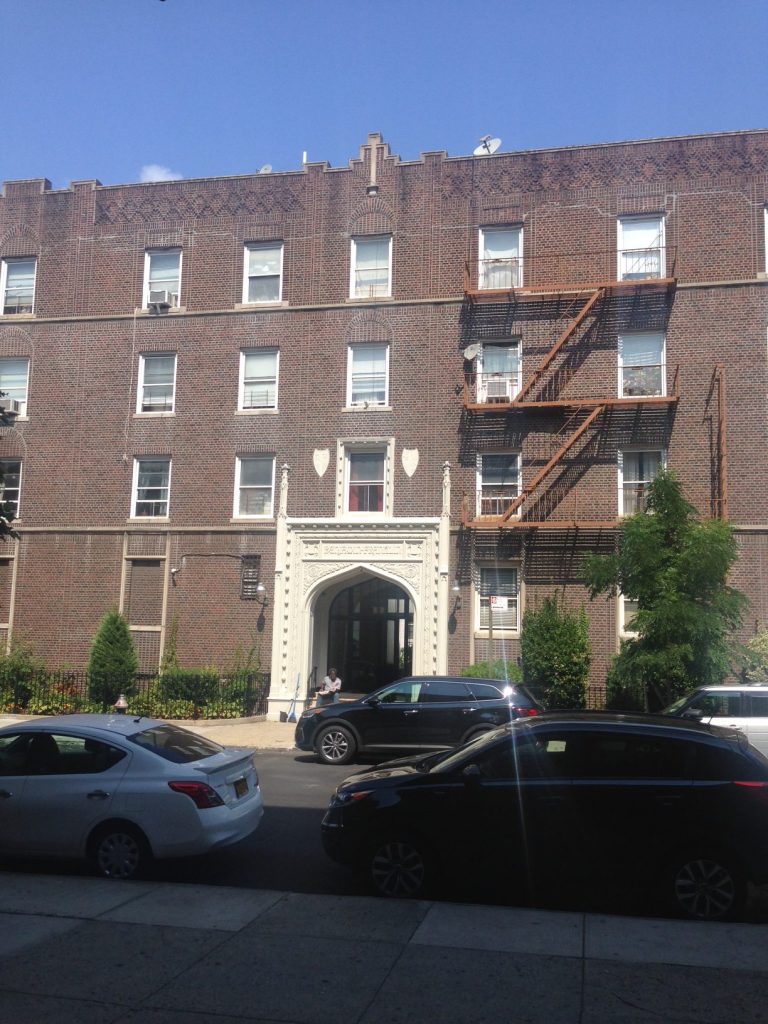
Each stop was memorable in its own way. In Brooklyn (to address a Sons of Norway Lodge) I was able to visit the apartment building where Odd Nansen lived while in America. In Lancaster, PA (addressing a Sons of Norway Lodge) I met a woman whose grand-uncle, Henry Gleditsch, is (tragically) written about in Nansen’s diary (pp. 260, 263). In Philadelphia I spoke to a dinner crowd at The Franklin Inn Club, a venerable literary society which boasts among its illustrious past members N.C. Wyeth and Howard Pyle, my two favorite painters. In Lutherville, MD (speaking to yet another Sons of Norway Lodge) I met a gentleman who told me his doctor in Baltimore had once been Hiltgunt Zassenhaus, the remarkable woman whom I write about on p. 543 of the book, and whom I have blogged about here. (She was nominated for the Nobel Peace Prize by the Norwegian Stortinget, or Parliament, in 1974.)
There were a few mishaps along the way. The most serious occurred on my final stop, The Adult School in Madison, NJ. Upon arrival, and anticipating an audience in excess of 60 people, I discovered that my car’s trunk (holding my entire stock of books) was shut tight, and no amount of yanking, pulling, begging or screaming would induce it to open. Panic ensued. I might still be pulling my hair out in the parking lot of the Madison High School were it not for the timely intercession of Phil Leopold (husband of Adult School Director and event coordinator Kris Leopold—and both Georgetown alums). Phil quickly and calmly located the trunk safety lock button on my dashboard and saved the day. One would think that, after 10 years of ownership and over 136,000 miles, I should know how my Volvo works. But one would be mistaken. (Which leads to another interesting question: what else don’t I yet know about this car??)
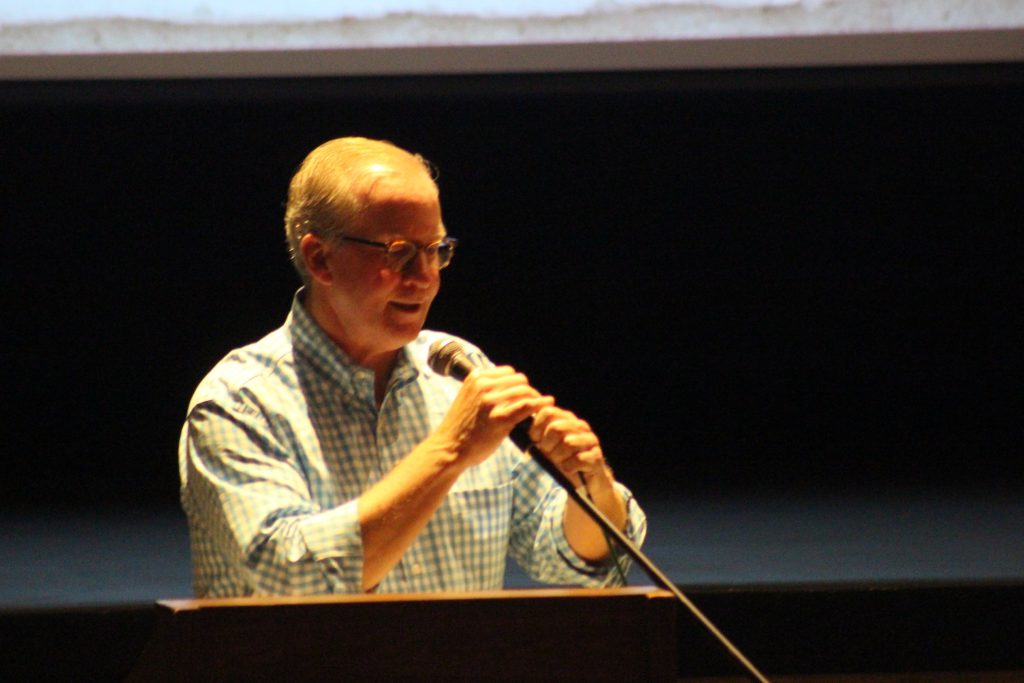
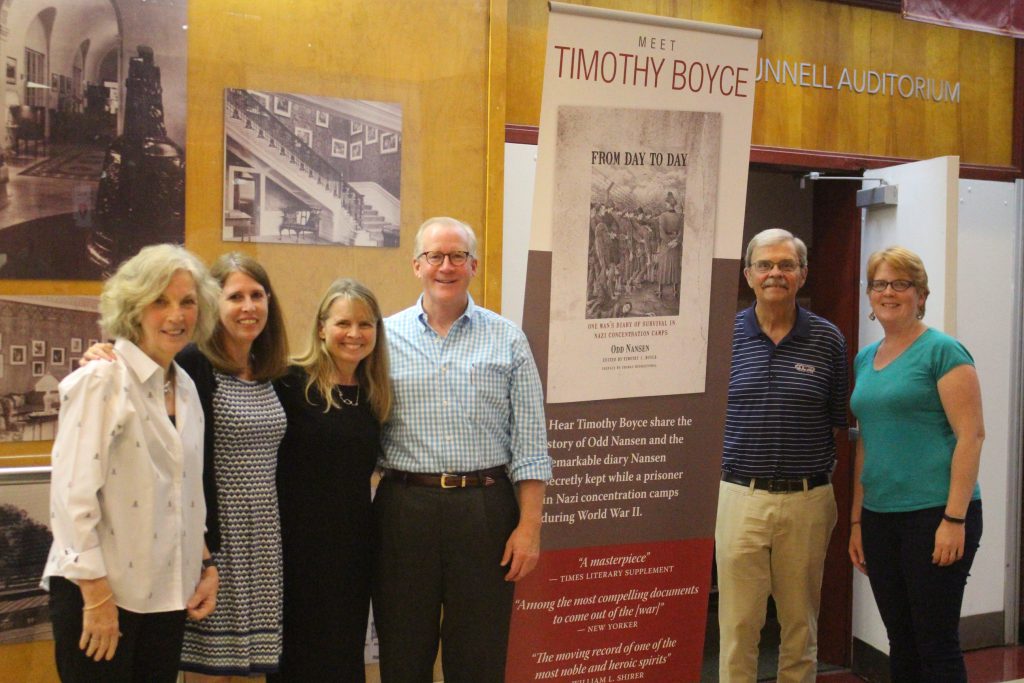
The trip would not have been nearly so enjoyable were it not for the hospitality extended to me by the hosts at each of my events, and by so many friends who put me up along the way: Brian and Karen Flaherty, Kathy and Richard Aleš, Dick and Holly Gross, and Kathy and Don Weida. You put up with my arrivals and departures at strange hours, provided food (and wine!), and most importantly, good company. Thanks to you all.
To quote Odd Nansen: “According to a very congenial interpretation of Einstein’s theory of relativity, with which I’m not very familiar, traveling makes one younger. I think there must be something in it.”
I think so too. And knowing that more people have now heard the story of this remarkable humanitarian made it all worthwhile.

