
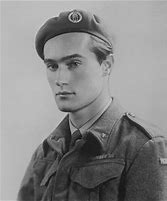
Joachim Ronneberg (1919–2018)

Joachim Ronneberg

Joachim Ronneberg, the last surviving member of Operation Gunnerside, the daring raid to destroy the heavy water facility at Vemork, Norway, died on Sunday, October 21.  Ronneberg was 99.  Obituaries from the New York Times and the BBC, respectively, are here and here.
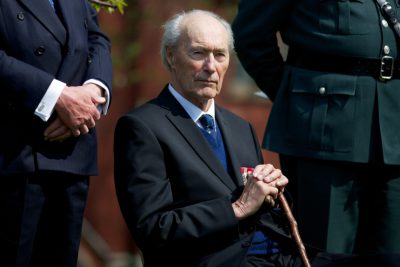
Norwegian World War II hero Joachim Ronneberg, 93, attends a wreath-laying ceremony in his honour at the SOE agents monument in central London on April 25, 2013, for leading the SOE operation Gunnerside where Norwegian soldiers destroyed the German occupied Heavy Water Plant in Vemork, Norway. AFP PHOTO / ANDREW COWIE (Photo credit should read ANDREW COWIE/AFP/Getty Images)

In 2016 I was asked by The Norwegian American to review The Winter Fortress, the latest in a string of books detailing Operation Gunnerside, written by Neal Bascomb.  The complete review is here.

It is worth quoting at length the final two paragraphs of my review:

“The members of Operations Grouse, Freshman, Swallow, and Gunnerside and the team that sunk the ferry on Lake Tinnsjø never really knew why destroying heavy water was so important; they only knew that it had to be destroyed. Moreover, the secrecy surrounding the Allies’ own atomic program meant that their feats could not be widely publicized during the war. The members were simply promised: “[Y]our actions will live in history for a hundred years to come.”

It’s a good bet that that promise will be fulfilled. After all, it is now almost 75 years [this was written in 2016] since the Grouse team first landed on the Vidda. They and their compatriots endured ferocious winter weather, near starvation, the constant threat of discovery, and even death, and yet their patriotism, courage, and fortitude in the face of all this still inspires worthy books such as The Winter Fortress. As the official historian of the SOE [Special Operations Executive], M.R.D. Foot, later observed: “If SOE had never done anything else, ‘Gunnerside’ would have given it claim enough on the gratitude of humanity.”

Humanity is indeed grateful, Joachim Ronneberg.  You have fought the good fight, you have finished the race, you have kept the faith.


From Day to Day: One Man’s Diary of Survival in Nazi Concentration Camps

Hailed by The New Yorker as “among the most compelling documents to come out of the war,” From Day to Day is a World War II concentration camp diary—one of only a handful ever translated into English—secretly written by Odd Nansen, a Norwegian political prisoner. Arrested in January 1942, Nansen, son of polar explorer and humanitarian Fridtjof Nansen (Nobel Peace Prize 1922) was held captive for the duration of the war in various Nazi camps in Norway and Germany.

Nansen’s diary entries detail his palpable longing for his wife and family, his constantly frustrated hopes for release, the quiet strength and sometimes ugly prejudices of his fellow prisoners, and his horror at the especially barbaric treatment reserved for the Jews. The diary brilliantly illuminates Nansen’s daily struggle, not only to survive, but to preserve his sanity and maintain his humanity in a world engulfed by fear and hate.

First published in English in 1949, From Day to Day had been out of print for almost seventy years. The new edition contains entries and sketches never previously available in English. It also features a new introduction and extensive annotations by Timothy Boyce and a preface by Thomas Buergenthal, whose life (as a ten year-old) Nansen saved while in Sachsenhausen, later recounted in his own memoir A Lucky Child: A Memoir of Surviving Auschwitz as a Young Boy.