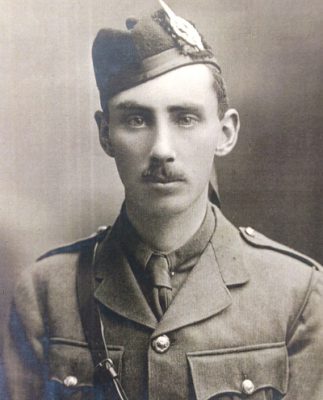
In Memoriam. Private D. Sutherland killed in Action
in the German Trench, May 16, 1916, and the Others who Died.
By E. A. Mackintosh
So you were David’s father,
And he was your only son,
And the new-cut peats are rotting
And the work is left undone.
Because an old man weeping,
Just an old man in pain,
For David, his son David,
That will not come again.
Oh, the letters he wrote you,
And I can see them still,
Not a word of the fighting,
But just the sheep on the hill
And how you should get the crops in
Ere the year gets stormier,
And the Bosches have got his body,
And I was his officer.
You were only David’s father,
But I had fifty sons
When we went up in the evening
Under the arch of the guns,
And we came back at twilight—
O God! I heard them call
To me for help and pity
That could not help at all.
Oh, never will I forget you,
My men that trusted me,
More my sons than your fathers’
for they could only see
The little helpless babies
And the young men in their pride.
They could not see you dying,
And hold you when you died.
Happy and young and gallant,
They saw their first born go,
But not the strong limbs broken
And the beautiful men brought low,
The piteous writhing bodies,
They screamed “Don’t leave me sir,”
For they were only your fathers
But I was your officer.
Private David Sutherland of the Seaforth Highlanders was killed during a trench raid on May 16, 1916; he has no known burial place. Lt. Ewart Alan Mackintosh received the Military Cross for conspicuous gallantry during the same raid. Macintosh was killed 17 months later, on November 21, 1917, on the second day of the Battle of Cambrai. He is buried in Northern France. He was 24 years old.