
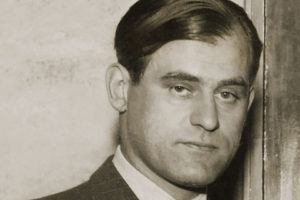
Seventy-four years ago today, at 7:30pm, Odd Nansen was arrested. Held hostage for the ensuing forty months, he was only freed on April 28, 1945, ten days before the war ended. Nansen was arrested on a Tuesday, not a Friday, but he was well aware of the superstition. In his diary, commenting in 1944 that wife Kari’s birthday (November 13) fell on a Friday, he observed:
“[Your birthday] has come on a Friday this year. Friday the thirteenth; what else could one expect? In this landslide of disaster and misery old superstitions have their place.”
It is worth noting that Miguel de Cervantes (whose death 400 years ago we will commemorate this April 22) observed in the prologue to his masterpiece, Don Quixote, that it was “begotten in prison, where every discomfort has its place, and every sad sound makes its home.” Prior to his incarceration—for mismanagement—Cervantes had also once been a hostage of sorts, captured by the Barbary pirates in 1575 and held captive for five years awaiting his ultimate ransom. Indeed, Ariel Dorfman recently wrote in an essay in the New York Times Book Review that these five years may well have been the defining experience of Cervantes’ life, forcing him to realize that “if we cannot heal the misfortunes that assail our bodies, we can, however, hold sway over how our soul responds to those sorrows.”
During every one of the 1,201 days Odd Nansen subsequently spent in captivity following his arrest, he undoubtedly wished for nothing more than to be with his wife and family, to be working on his architectural projects, to be free. But the diary he created in prison is an eloquent depiction of how we too can “hold sway over how our soul responds to . . . sorrows,” and forty-three years after Nansen’s death we remain its grateful beneficiaries.

