
This past weekend I had the pleasure of attending the 10th International Conference on World War II, held in New Orleans and sponsored by the National WWII Museum.
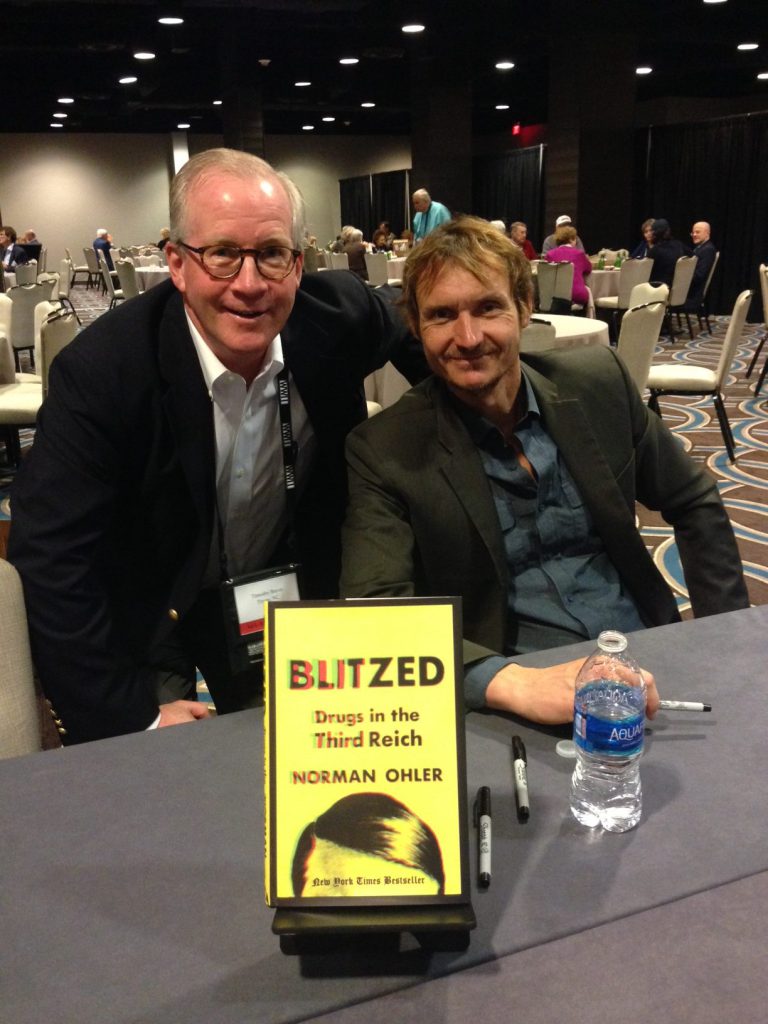
I was particularly interested in hearing and meeting one of the program speakers, Norman Ohler, author of Blitzed, the 2015 bestseller (since translated into 25 languages) which depicts in great detail the rampant drug abuse by both Adolf Hitler and, more generally, the German armed forces during World War II. Ohler’s presentation was quite interesting, and I enjoyed the chance to meet with him afterward 1) to get my copy of his book signed (of course), and 2) to discuss his use of Odd Nansen’s Diary, From Day to Day, in support of his arguments. As I have written previously, Nansen was an eye-witness (in Sachsenhausen) to the use of prisoners as guinea pigs in the development and testing of ever more powerful stimulants for use in the German war effort.
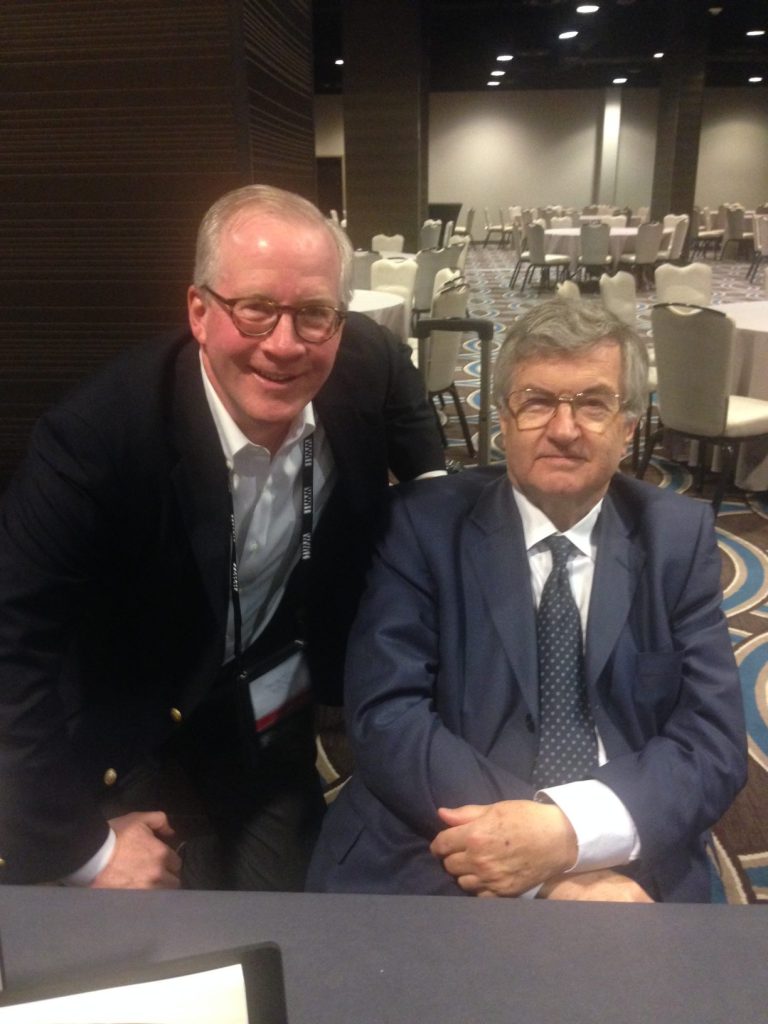
An additional highlight was meeting another of my favorite historians, Sir Richard Evans, formerly Regius Professor of History at Cambridge University. Evans is the author of the magisterial Third Reich trilogy, as well as a number of other important works, such as The Third Reich in History and Memory.
It turns out that Evans and I have an acquaintance in common. Nikolaus Wachsmann, the author of KL: A History of the Nazi Concentration Camps, and now a professor at the University of London, was once Evans’s research assistant. Wachsmann begins Chapter 11 of his own highly regarded book with an in-depth description of Odd Nansen and Tom Buergenthal. Since Wachsmann was already well acquainted with Nansen’s diary he readily agreed to provide a “blurb” for my book, which now graces the rear dust jacket:
“A long-forgotten masterpiece. In his secret diary, written inside the Nazi camps, the Norwegian prisoner Odd Nansen paints a deeply affecting picture of everyday terror, sketching the inmates’ lives and deaths with exceptional clarity and compassion. Rarely has the inhumanity of the camps been captured with such humanity.”
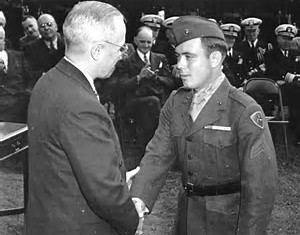
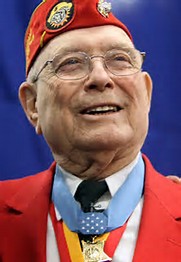
Other highlights of the conference were meeting Richard Overy, author of The Bombers and the Bombed (on which I relied for several of my annotations), and a spell-binding Closing Keynote Address by Hershel “Woody” Williams, one of only four living World War II Medal of Honor recipients (out of 472 awarded). Now 94, Williams was initially rejected by the Marines for being too short. When the height requirement was subsequently lowered, he re-applied and joined the 3rd Marine Division. For his actions on Iwo Jima on February 23, 1945 (the same day the U.S. flag was raised above Mt. Suribachi), Williams was awarded the Medal of Honor by President Truman on October 5, 1945.
A memorable conference!

