
Henrik Arnold Wergeland, variously described as “Norway’s Byron,” “Norway’s Pushkin,” and “Norway’s Victor Hugo,” died 174 years ago today, on July 12, 1845, age 37.
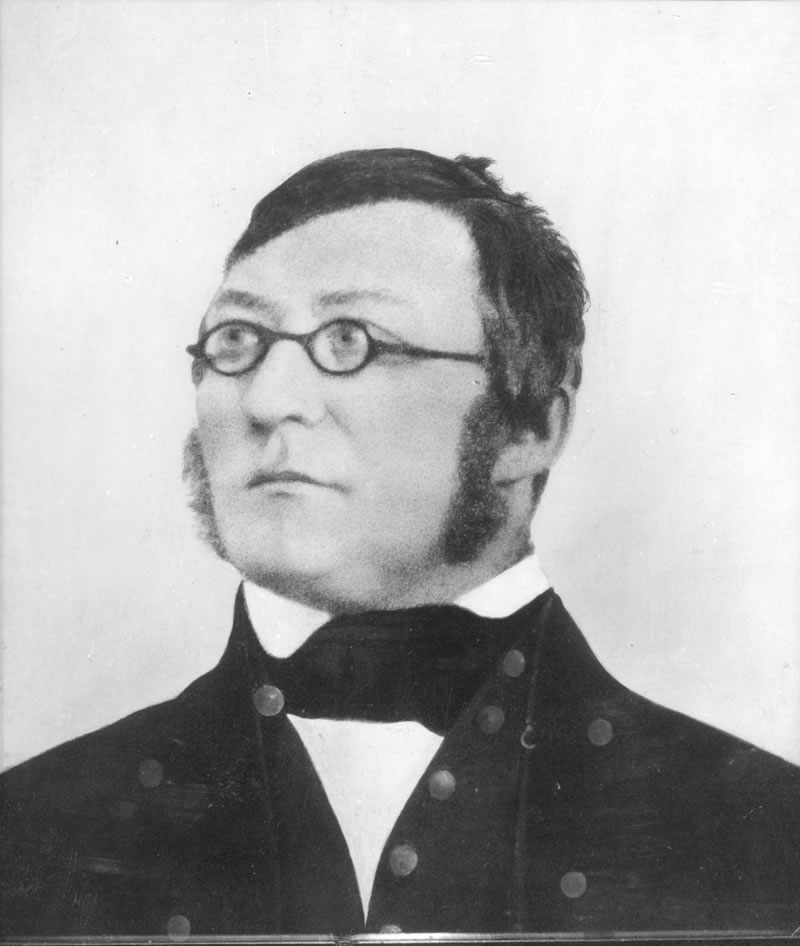
Despite his brief life, Wergeland was a prolific writer, poet, playwright, polemicist, historian and linguist. Today, however, he is probably best known for his work on behalf of Norway’s Jews.
When Norway’s constitution (the second oldest in the world in continuous force, after America’s) was adopted on May 17, 1814, Clause 2 banned virtually all Jews from entering the country. As an equal opportunity discriminator, the drafters of the Constitution for good measure also banned Jesuits (so much for my Georgetown education!) and all monastic orders. One of the three delegates behind the so-called “Jew clause” was none other than Wergeland’s father, Nicolai Wergeland.
For years Wergeland considered Clause 2 to be a national disgrace, contrary to all the values otherwise contained in the Constitution, and he worked tirelessly for its repeal. In that effort he published two collections of poems, The Jew (1842), the most famous poem of which is “The Army of Truth,” and The Jewess (1844).
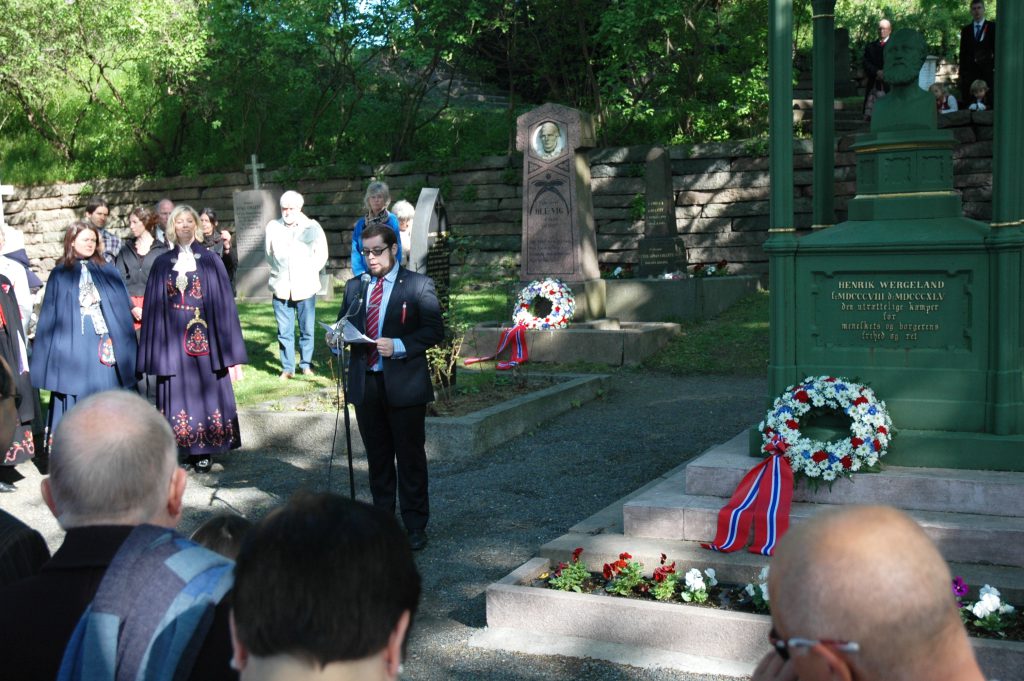
Wergeland did not live to see the successful conclusion of his efforts, which occurred on June 13, 1851, six years after his death. In 1849, following his death, but before the repeal of Clause 2, Jews living outside of Norway obtained special permission to enter and erect a monument at Wergeland’s graveside. On it are engraved the following words: “Henrik Wergeland, the indefatigable advocate of freedom and justice for humanity and all citizens.” Wergeland was also one of the moving forces behind the popularization of Syttende Mai, Norway’s Constitution Day, which today always includes a ceremony at his grave site. (During WWII the Nazi’s forbade any celebration of Wergeland. Also during the war Vidkun Quisling ordered the reinstatement of Clause 2.)
One might think the story ends there, but this is Norway, which is a very small country. One of the Wergeland’s strongest literary critic was Johan Sebastian Wellhaven, another giant of Norwegian literature. Wellhaven’s niece was none other than Eva (Sars) Nansen, Odd Nansen’s mother. In addition, Wergeland’s complete works were published in 23 volumes between 1918 and 1940, edited in part by Didrik Arup Seip, Rector of the University of Oslo. Siep was also a fellow prisoner of Odd Nansen’s in Grini and Sachsenhausen. A small world indeed!
“Words? Those sounds the world despises.
Words in poems?
Even more to be disdained!
Ah, how feeble are your powers
to defend
all the truth that man denies!
. . . .
Forward, though, you feeble lines!
Words are armies!
On this earth your victory
was promised by the Lord, Light’s father,
when you serve
Truth itself, his child, alone.”
From The Army of Truth.

