
Eighty years ago today, the largest amphibious assault ever undertaken, Operation Overlord, began.
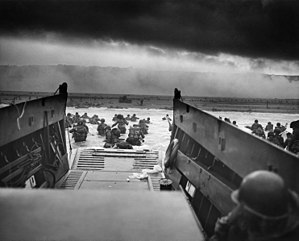
In retrospect, events like D-Day increasingly to take on an aura of historical inevitability. It seems inevitable that the massive Allied landings would succeed, inevitable that the second front would be established, inevitable that Germany’s demise would ultimately follow. It had to be “the beginning of the end.”
Success certainly didn’t seem so assured at the time. General Dwight Eisenhower, supreme commander of all Allied forces, wrote two announcements in the hours before D-Day began: one, announcing success, and crediting the troops, and a second, accepting sole responsibility for Overlord’s failure.
One thing which remains all the more astounding in hindsight is the secrecy which was successfully maintained right up to the launch of the invasion—an undertaking massive in scope: involving 156,000 men and almost 7,000 naval vessels. Nevertheless, the timing and the location of the invasion caught almost everyone—including the Germans—by surprise.

For Odd Nansen, news of the Allied landings “came like thunder from a clear sky,” he wrote in his diary on June 6. “I’d almost given up the idea of that everlasting invasion, that second front that had been haunting our minds for almost three years, and now it’s really started!” Despite Nansen’s excitement, it would be another ten months–the worst ten months of his prison existence–before he would finally see freedom.
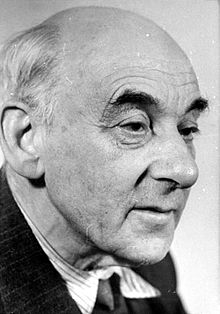
Another diarist, Victor Klemperer, was not nearly so enthusiastic. Klemperer, a German Jew, had managed (just barely) to avoid deportation to a concentration camp solely due to his marriage to a non-Jew. His diary, begun in 1933 with Hitler’s accession to power, relates, in excruciating detail, his ever more harrowing existence at the hands of his German tormentors: primarily the Gestapo, but also neighbors and colleagues who shunned him after years of (apparent) friendship.
On the evening of June 6, Klemperer was giving a private tutoring lesson (having long since been deposed from his university teaching position) when, as he confided in his secret diary: “Eva [his wife] brought the news that the invasion had begun last night (from June 5-6). Eva was very excited, her knees were trembling. I myself remained quite cold, I am no longer or not yet able to hope.” Even days later, when it was apparent that the landings had succeeded, Klemperer admitted, “I can no longer hope for anything, I can hardly imagine living to see the end of this torture, of these years of slavery.”
Klemperer nevertheless miraculously survived the war, dying in 1960, age 78.

Perhaps the most enthusiastic of all diarists was Anne Frank. On June 6 she was almost two years into her enforced, hidden existence in the secret “annex” above her father’s shop, along with seven other people. At first, she records, everyone in the annex concluded the event was merely a trial run, much like the Dieppe landing two years earlier. By 10am, however, with BBC broadcasts in German, Dutch, French and other languages, they all realized this was the “real” event. “Is this really the beginning of the long-awaited liberation? The liberation we’ve all talked so much about, which still seems too good, too much of a fairly tale, ever to come true? Will this year, 1944, bring us victory? We don’t know yet. But where’s there’s hope, there’s life. It fill us with fresh courage and makes us strong again. We’ll need to be brave to endure the many fears and hardships and suffering yet to come.”
What young Anne Frank did not, could not, know, was that she would not be liberated, and in fact was fated to record only eleven more entries in her diary. On the morning of August 4, 1944, several security police arrived at 263 Prinsengracht, Amsterdam, and arrested all eight people in hiding–the victims of an apparent betrayal, although the culprit has never been definitively established. Of the eight people rounded up that morning, only Anne’s father Otto Frank survived the war.
Excitement, despair, hopefulness—the feelings generated by the D-Day invasion. Although Anne Frank never experienced the fruits of the Allies’ sacrifice on that day, millions of other Europeans did, finally freed from the yoke of Nazi oppression. Anne, not yet fifteen years old on D-Day, yet had the wisdom to recognize one thing: where there’s hope, there’s life.
(A version of the foregoing previously appeared in 2020)

