
Tom Buergenthal died one year ago today, after a long and illustrious career. He had just turned 89 years old a few weeks prior.
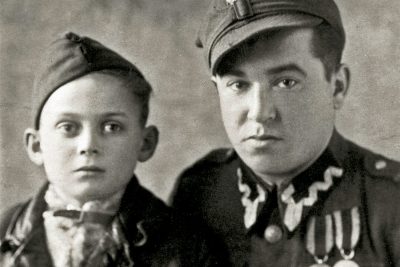
When I first met Tom in early 2011, all I knew about him was what I had read in his memoir, A Lucky Child, and in the pages of Odd Nansen’s diary:
“The child arrived a fortnight ago with another big transport, in which many froze to death or got their arms and legs frostbitten. He knows nothing of his father or mother, and he has no brothers and sisters. He is all alone in the world, alone among strange men in a strange land, at ten years old! Death and destruction, murder, torture and all the devilry of man are familiar to him. Such was his picture of the world—the only picture he had had a chance of forming. He knew nothing, of life—and death—but what he had seen in hell!
Yet I couldn’t make out any stamp, in that little face, of all the horrors he had lived among; the eyes were large and greyish brown, with an open, calm and trustful expression, and smiles were playing around his mouth the whole time. Perhaps there was something nervous about the mouth, yet no, for children smile most when they feel safe and comfortable. There may have been a little shyness too, I don’t know, but I realized from the moment Scott [Isaksen] (who was with me) pointed out that his hands had taken over all the symptoms of nervousness. He couldn’t keep them still a moment, they were always passing over the blanket, fingering the corners of the sheets, the flaps of his collar; he had a little book, he turned it round and round, turned over the pages, shut it again, took up a pencil Scott had given him, fiddled with it, dropped it, rubbed his forehead, brushed his hand across his face, mouth, ears, hair and back to the corners of the sheets. In perpetual motion. And they were grown-up hands, not like a child’s with chubby, stubby fingers and round backs; they were long and sensitive, the fingers finely shaped, transparently pure and delicate with finely modeled palms; beautiful hands, but they didn’t seem to belong in Raphael’s picture. It was as though this child’s whole tragedy had found expression in those little, oversensitive hands, and once I had noticed them, it was impossible to take one’s eyes off them.
….
I said something about bombs and flying machines like that being terrible things that we mustn’t care for, but I knew I was going too fast, it would take years to save this little soul. And all at once I felt such a burning desire to take him with me, keep him, protect him and make a human being of him! A thrill of joy, a few good seconds, before I realized the hopeless impossibility of such a plan. I asked him if he had read any of that book. No, he couldn’t read. And write? ‘Can you write me a letter by next Sunday?’ No, he said, he couldn’t write either. ‘Well, but your mother must have taught you to read and write at Kielce?’ ‘No, they had the death penalty for that, so she didn’t dare,’ he said with a smile.
Even though I’m pretty thoroughly hardened by this life here and in German concentration camps altogether, and used to hearing and seeing both this and that, these little, smiling replies of his came down on me like bombs.”
(Diary entry Monday, February 19, 1945.)
In the intervening 12 years, as I came to know Tom, I always found it difficult, nigh impossible, to reconcile the person that Odd Nansen met with the person that I knew.
How could, in Tom’s own words, “a perennially frightened and hungry camp inmate,” one whose “sole concern had been to survive from one day to the next,” become a renowned and lauded advocate for human rights, but more importantly, become the kind, generous, cheerful, gracious, thoughtful, supportive mentor I came to know and love?
Tom, you were, are, and will always be, an inspirational example of how a human being, exposed to the very worst of humanity, can nevertheless embody and exemplify the very best of humanity.
 Rest in peace.

