
I have the honor and privilege of being chosen to give the keynote address at the 23rd annual Raoul Wallenberg memorial dinner at the Nordic Museum of Seattle on June 7 at 5:30 pm.

The Nordic Museum, which celebrated its grand opening in its new, $40 million facility this past weekend, is an internationally recognized museum and cultural center dedicated to collecting, preserving and educating since its founding in 1980. It is the largest museum in the United States honoring the legacy of immigrants from all five Nordic countries.
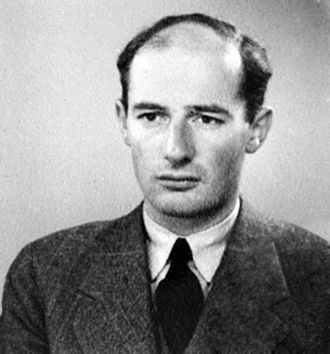
Raoul Wallenberg was born into a prominent Swedish family in 1912. Like Odd Nansen, he studied to be an architect, graduating from the University of Michigan in 1935. The following year he took a job with an export-import company owned by Kalman Lauer, a Hungarian Jew. Wallenberg was himself one-sixteenth Jewish (through one of his great-great-grandfathers), a fact of which he was very proud.
As a result of anti-Semitic decrees in Hungary beginning in the mid-1930s, and later with the onset of World War II, Wallenberg, now a co-owner of the trading company, undertook numerous business trips to Hungary, Germany and German-occupied France in his partner’s place. Along the way he learned to speak Hungarian and observed German bureaucratic methods.
By early 1944 it was apparent to all that Germany would lose the war, and Hungary, an Axis power, began secret discussions with the Allies, hoping to secure a separate peace. When an enraged Hitler learned of these negotiations he ordered the occupation of Hungary, which occurred on March 19, 1944.
Adolf Eichmann, one of the most notorious organizers of the Holocaust, was soon dispatched to Budapest, and the Jewish population, which had not previously felt the full brunt of the Holocaust, now began to be deported in massive numbers. [Eichmann was later hanged in Israel in 1962 for his role in the Final Solution.]
In less than three months (May-July 1944), approximately 430,000 Hungarian Jews were transported to Auschwitz; somewhere between 70 and 90 percent were killed upon arrival.
As reports of these actions filtered back to the Allies, President Roosevelt sent Treasury official Iver Olsen to Sweden to locate someone willing to travel to Hungary under diplomatic cover (Sweden then being a neutral nation) to organize a rescue program for the Jews. Olsen approached a relief committee of prominent Jewish leaders in Sweden for assistance. Kalman Lauer, Wallenberg’s business partner, was a member of this committee.
The committee’s first choice was actually Count Folke Bernadotte, Vice-Chair of the Swedish Red Cross. [Folke Bernadotte, a friend of Odd Nansen’s, would later organize the relief program for Scandinavian inmates in all Nazi concentration camps, known as the White Buses operation. While on an inspection visit to Neuengamme, Bernadotte met up with prisoner Nansen. “When [Nansen] was brought before me and I saw him snatch off his cap and stand to attention as all prisoners were required to do when in the presence of a German of rank . . . I boiled with anger,” Bernadotte would later write.]
When Bernadotte was rejected by the Hungarian authorities, Lauer suggested Wallenberg. Despite some U.S. misgivings about Wallenberg’s reliability, given existing ties between Wallenberg family businesses and Germany, he was assigned as a special envoy to the Swedish legation in Budapest in July 1944.
Those concerns proved misplaced. Immediately upon his arrival Wallenberg began issuing “protective passports” to Jews, thus preventing their deportation. In all, approximately 9,000 passes were issued. He also rented numerous buildings in Budapest, thereby converting them to Swedish “territory” subject to diplomatic immunity. Eventually these buildings housed almost 10,000 people.
Wallenberg’s actions came at significant personal risk. He was forced to sleep in a different location each night to avoid capture or execution by Hungarian fascists (Arrow Cross Party) or Eichmann’s SS members.
Having successfully eluded the Nazis, Wallenberg ultimately fell victim to the approaching Soviets. During the siege of Budapest in early 1945, Wallenberg was summoned to the headquarters of Marshal Rodion Malinovsky, commander of the 2nd Ukrainian Front. His last recorded words were “I’m going to Malinovsky’s . . . whether as a guest or prisoner I do not know yet.” He was never seen again, and is presumed to have died in Soviet captivity in 1947, although the exact circumstances of his death remain subject to much speculation.
Wallenberg has been recognized as one of the Righteous Among Nations by Yad Vashem, and posthumously awarded the Congressional Gold Medal by the United States Congress. In 1981 he was designated an Honorary Citizen of the United States, the second person to ever receive the honor (after Winston Churchill). The sponsor of the bill was U.S. Congressman Tom Lantos (D. CA), one of the thousands whose life was saved by Wallenberg’s efforts in Hungary.
It will indeed be an honor and a privilege to discuss one great Scandinavian humanitarian, Odd Nansen, while commemorating the life of another great Scandinavian humanitarian, Raoul Wallenberg.
More information about the event can be found here. Tickets are $70 for non-museum members; $60 for museum members.

