“Now this is not the end. It is not even the beginning of the end. But it is, perhaps, the end of the beginning.”
Winston Churchill, November 10, 1942
When you think about World War II, it is easy to focus on events such as Pearl Harbor and D-Day. I would submit, however, that the most pivotal events of the war occurred 82 years ago, on February 1-2, 1943.
On February 2, 1943, the final remnants of the German 6th Army surrendered at Stalingrad.
Stalingrad has been called the single largest and costliest land battle in military history, and the “bloodiest and fiercest battle in the entirety of World War II and arguably in all human history.” Although figures vary widely, even estimates as high as 4 million combined casualties, including 1 million deaths, are thought by some to be underestimates. What is certain is that Stalingrad represents the greatest defeat in German military history. The Soviets could replace their losses; the Germans could not. Moreover, the myth of German invincibility—nurtured during the blitzkrieg campaigns of 1939-1941 across Europe—was now gone forever.
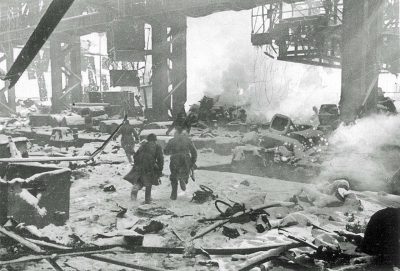
The German prisoners resulting from the surrender, nearly 91,000 frostbitten and wounded soldiers, were marched eastward, on foot, to Siberia. Thousands would die on the march, and thousands more would die in captivity; only 5,000—6,000 returned home, the last in 1955. After Stalingrad Germany was never able to regained the strategic initiative.
Meanwhile, thousands of miles away, the Japanese Army, after months of intense fighting, began their evacuation of Guadalcanal on February 1, 1943.
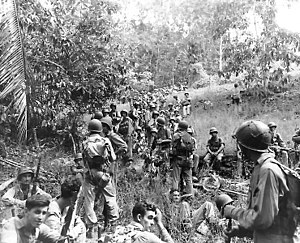
For six months the issue had been in doubt, as both the Japanese and the Americans poured reinforcements into the fray for control of the island, a god-forsaken spit of land with an all-important airfield, Henderson Field. Six major naval engagements were fought around the island, with 67 ships sunk (29 American; 38 Japanese). The surrounding waters became known as “Ironbottom Sound.” Final Japanese personnel losses amounted to 19,200 dead; the Americans suffered 7,100 dead and 7,800 wounded.
The withdrawal, which was completed on February 7—six months to the day when U.S. forces had first landed, represented the first time that Japanese forces were forced on the defensive since they had initiated combat operations in 1937.
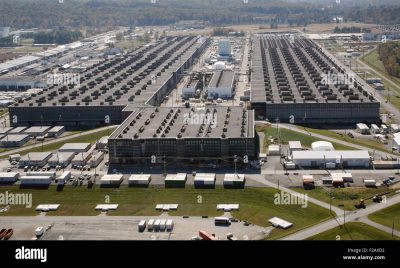
As if that were not enough by way of portents, on February 1, 1943, the U.S. Government broke ground on 59,000 acres located 18 miles west of Knoxville, Tennessee, between Black Oak Ridge and the Clinch River. Their objective: to build the first ever manufacturing plant for Uranium 235 needed to build the atomic bomb.
Over 1,000 families received court orders to vacate within weeks the homesteads and farmlands that their forbears had occupied for generations.
The gaseous diffusion plant, known as K-25, covered more area than any structure ever built, and employed 12,000 workers. The nearby Y-12 electromagnetic plant employed another 22,000 workers. A third plant, X-10, served as a pilot plant for a larger plutonium plant to be built in Hanford, Washington. The resulting workers’ city, which eventually swelled to almost 80,000 people, became known as Oak Ridge, Tennessee.
The Nuclear Age had begun.