
George Orwell, Truth, and Lies

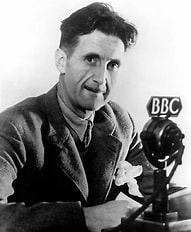
Seventy-six years ago today, one of my favorite authors, Eric Blair, more commonly known by his pen name, George Orwell, died from complications of tuberculosis.   He was only 46.  His most important work, Nineteen Eighty-Four, had been published less than seven months earlier.

To commemorate his death, I offer two of his quotations for consideration:

“Totalitarianism demands, in fact, the continuous alteration of the past, and in the long run probably demands a disbelief in the very existence of objective truth.”

“The further a society drifts from the truth the more it will hate those who speak it.”

When I first read Orwell decades ago, I thought he was describing the past. 

Now, I suspect, he was predicting the future.

RIP George Orwell
From Day to Day: One Man’s Diary of Survival in Nazi Concentration Camps

Hailed by The New Yorker as “among the most compelling documents to come out of the war,” From Day to Day is a World War II concentration camp diary—one of only a handful ever translated into English—secretly written by Odd Nansen, a Norwegian political prisoner. Arrested in January 1942, Nansen, son of polar explorer and humanitarian Fridtjof Nansen (Nobel Peace Prize 1922) was held captive for the duration of the war in various Nazi camps in Norway and Germany.

Nansen’s diary entries detail his palpable longing for his wife and family, his constantly frustrated hopes for release, the quiet strength and sometimes ugly prejudices of his fellow prisoners, and his horror at the especially barbaric treatment reserved for the Jews. The diary brilliantly illuminates Nansen’s daily struggle, not only to survive, but to preserve his sanity and maintain his humanity in a world engulfed by fear and hate.

First published in English in 1949, From Day to Day had been out of print for almost seventy years. The new edition contains entries and sketches never previously available in English. It also features a new introduction and extensive annotations by Timothy Boyce and a preface by Thomas Buergenthal, whose life (as a ten year-old) Nansen saved while in Sachsenhausen, later recounted in his own memoir A Lucky Child: A Memoir of Surviving Auschwitz as a Young Boy.