
Two (2) days hence—January 13—marks the 83rd anniversary of Odd Nansen’s arrest at the hands of the Nazis. It would be the start of a 39-month saga, involving incarceration in jails, police detention camps, work camps and two concentration camps.
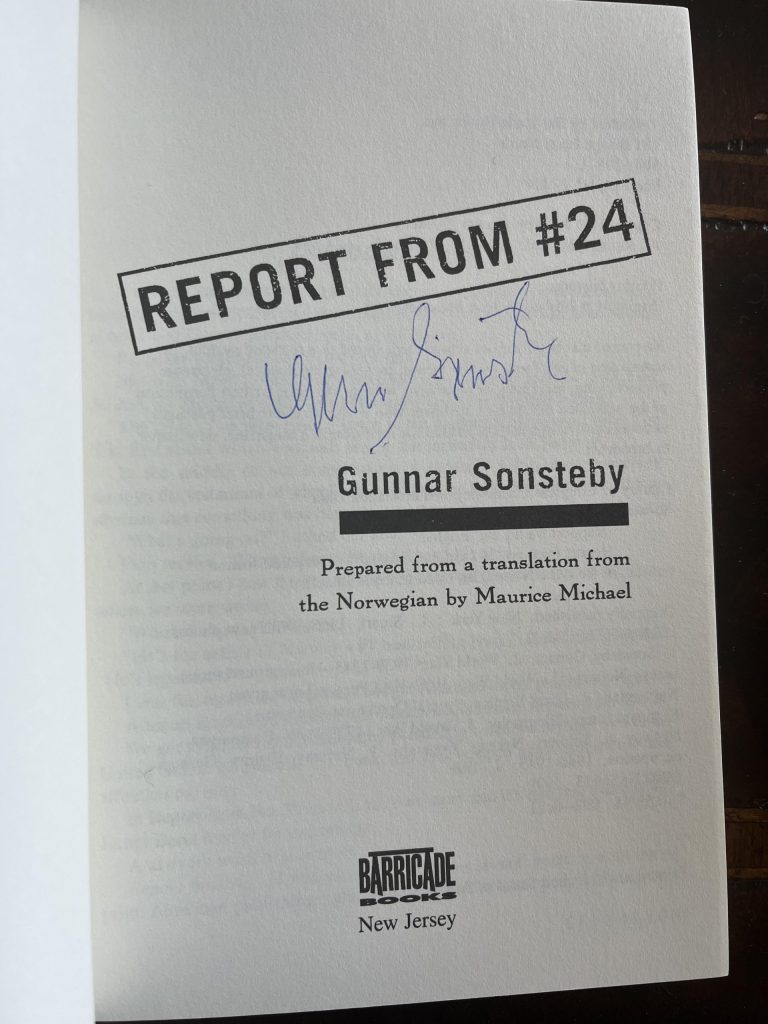
What better way to commemorate that event than by watching a new Norwegian film, now available on Netflix, which retells the World War II exploits of Gunnar Sønsteby, the most highly decorated Norwegian resistance fighter of the War. (By the way, today also happens to be Sønsteby’s birthday.) The name of the movie is “Number 24” (or “NR24”), an allusion to the code name given to Sønsteby when he was recruited by the British Special Operations Executive (SOE): Number 24, as well as the title of the memoir he wrote of his exploits after the war, Report From No. 24.
To say that Sønsteby was the most highly decorated Norwegian tells only half the story. He is the only person to ever receive Norway’s War Cross with three swords, and the first non-American to be awarded the U.S. Special Operations Command Medal; the full listing of his medals, awards, and recognitions is simply staggering.

The movie follows an oft-used format: an elderly Sønsteby addresses an audience of high school-aged students about his experiences as the head of the so-called Oslo Gang (which has been described as the best group of saboteurs in Europe). Those exploits are then told in flashbacks depicting a youthful Sønsteby blowing up strategic factories, important file repositories, as well as dispatching senior Nazis and their Norwegian collaborators. Through a combination of audacity, guile, fearlessness, and most importantly, meticulous planning, Sønsteby is able to wreak havoc in and around Oslo despite being the most wanted man in Norway. (One rule: never sleep in the same bed twice.) Due to his vast knowledge of resistance activities in Norway Sønsteby chose to always carry hand grenades and cyanide with him, prepared to commit suicide rather than risk giving away information under torture (something I’ve previously written about here)
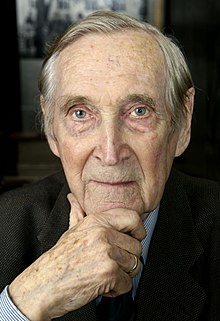
Sønsteby was born on January 11, 1918 in the tiny hamlet of Rjukan, Norway, the site of the only heavy water production facility in the world. Those of you who have heard my lecture, “The Heavy Water War: Stopping Hitler’s Atomic Bomb,” will know the significance of Rjukan and heavy water to both the Nazis and the Allies. One of the members of the Oslo Gang depicted in the movie, Knut Haugland, participated in the raid on Vemork.
In fact, the setting in the movie for the elderly Sønsteby’s presentation is the Vemork hydroelectric plant which powered the heavy water production apparatus. The building, complete with its giant turbines, is now a museum, and the hydroelectric plant has been moved inside the nearby mountain.
Towards the end of the film, the elderly Sønsteby has concluded his inspiring tale of his many successes, close calls, and escapes, leading to audience Q&A. A bright-eyed young student asks Sønsteby if he had ever considered following Gandhi’s principles of non-violence.
Sønsteby’s curt reply: “Gandhi didn’t against fight the Nazis.” (There is an added twist concerning this student, but I won’t give that part away.)
I think that was a pretty good answer.
Consider that exactly one week after Odd Nansen’s arrest, 15 high ranking SS leaders and Reich civilian ministers met in Wannsee, Germany, a suburb of Berlin, to set in motion the Endlösung—the Final Solution to the Jewish Question.
In fact, even before the Wannsee Conference met (it was originally scheduled to convene on December 9, 1941, but was postponed until January on account of the Japanese attack on Pearl Harbor), the Holocaust had already begun. On January 16, 1942, three days after Nansen’s arrest, the first transport of Jews from the Łódź Ghetto reached the newly finished killing center at Chelmno (aka Kulmhof), where they were murdered upon arrival using gas vans. During its existence Chelmno would murder at least 152,000 people, with some estimates reaching as high as 200-300,000 people, the vast majority Jewish.
By the time Germany finally capitulated a mere 39 months later (or almost exactly the duration of Odd Nansen’s imprisonment) the Nazis had managed to murder approximately 6 million Jews, and almost the same number of Soviet POWs, Polish intellectuals, Roma, Jehovah’s Witnesses, homosexuals, “asocials” and others. That’s more than the entire population of my state, North Carolina.
Interestingly, one of the many exploits of the Oslo Gang was the 1945 sinking of the German transport ship Donau, the same ship which had been used in late 1942 to transport Norway’s Jews to Auschwitz.
No indeed, Gandhi did not fight against the Nazis.
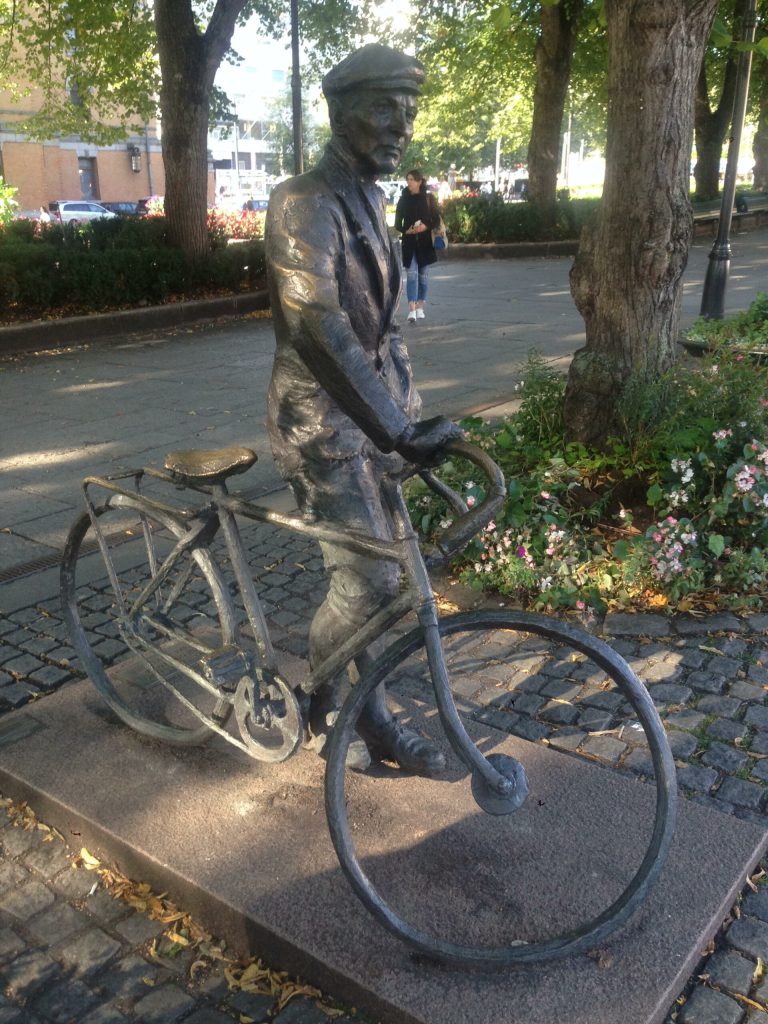
PS: As noted in an earlier blog (here) I had the great good fortune to meet the real Gunnar Sønsteby and his wife Anne-Karin in Norway’s Resistance Museum (Norges Hjemmefrontmuseum) not long before his death on May 10, 2012, age 94. He was extraordinarily gracious and talkative, and it was an experience I will never forget. I even got him to autograph my copy of Report From No. 24.
PPS: The movie is in Norwegian with closed-captioning. I give it 5 stars—highly recommended.

