“Aeschylus and Plato are remembered today long after the triumphs of imperial Athens are gone. Dante outlived the ambitions of 13th century Florence. Goethe stands serenely above the politics of Germany, and I am certain that after the dust of centuries has passed over our cities, we, too, will be remembered not for our victories or defeats in battle or in politics, but for our contribution to the human spirit.”(emphasis added)
Remarks made by President John F. Kennedy on behalf of the National Cultural Center (subsequently renamed the John F. Kennedy Center for the Performing Arts), November 29, 1962.
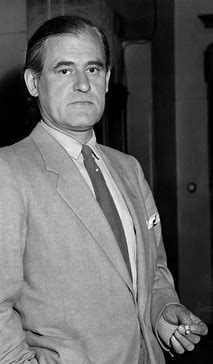
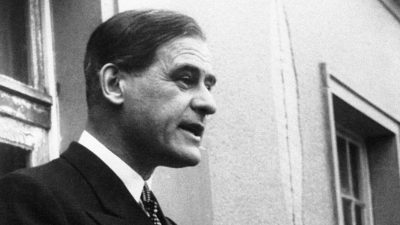
Today, on the anniversary of Odd Nansen’s birth in 1901, I’m going to go out on a limb and predict that, long after the dust of centuries has passed over our cities, and everyone reading this blog is no more, Odd Nansen’s diary of captivity will be remembered for its contribution to the human spirit.
And I’m in good company.
For William L. Shirer, later to become famous for his magisterial The Rise and Fall of the Third Reich, Nansen’s diary “remind[s] us in never-to-be-forgotten pages how noble and generous the human spirit can be in the face of terrible adversity.” Odd Nansen was, in Shirer’s estimation, “one of the noble and heroic spirits of our . . . times”
Similarly, when three-time Pulitzer Prize winner Carl Sandburg was asked in 1956 by the magazine of the Phi Beta Kappa Society to name “the most undeservedly neglected” work of the preceding quarter-century, he chose From Day to Day, calling it an “epic narrative” that “took its place among the great affirmations of the power of the human spirit to rise above terror, torture, and death.”
Happy Birthday, Odd Nansen