Back in the good old days (surely you remember, like February last), I was looking forward to a robust 2020 speaking schedule, with events ranging from DC to New Jersey to Chicago to Minnesota to the Dakotas, and even Norway. Accordingly, I stocked up on a healthy supply of Odd Nansen’s From Day to Day to handle the expected demand.
Well, we all know how that turned out.
I am slowly ramping up my virtual speaking schedule, and have my fingers crossed that by 2021 we’ll have a workable vaccine and may be able to resume in-person events. In the meantime, I keep staring at my stack of books.

Recently, I realized that I was looking at the situation entirely the wrong way. I was reading Richard Hofstadter’s 1964 Pulitzer Prize-winning classic, Anti-Intellectualism in American Life, and came across Hofstadter’s discussion of Henry David Thoreau, and a problem Thoreau ran into when faced with an overstock of one of his own books:
“Thoreau remarked on the seven-hundred-odd unsold copies of an edition of a thousand of his A Week on the Concord and Merrimac Rivers which were stacked in his room: ‘I now have a library of nearly nine hundred volumes, over seven hundred of which I wrote myself. Is it not well that the author should behold the fruits of his labor?’”
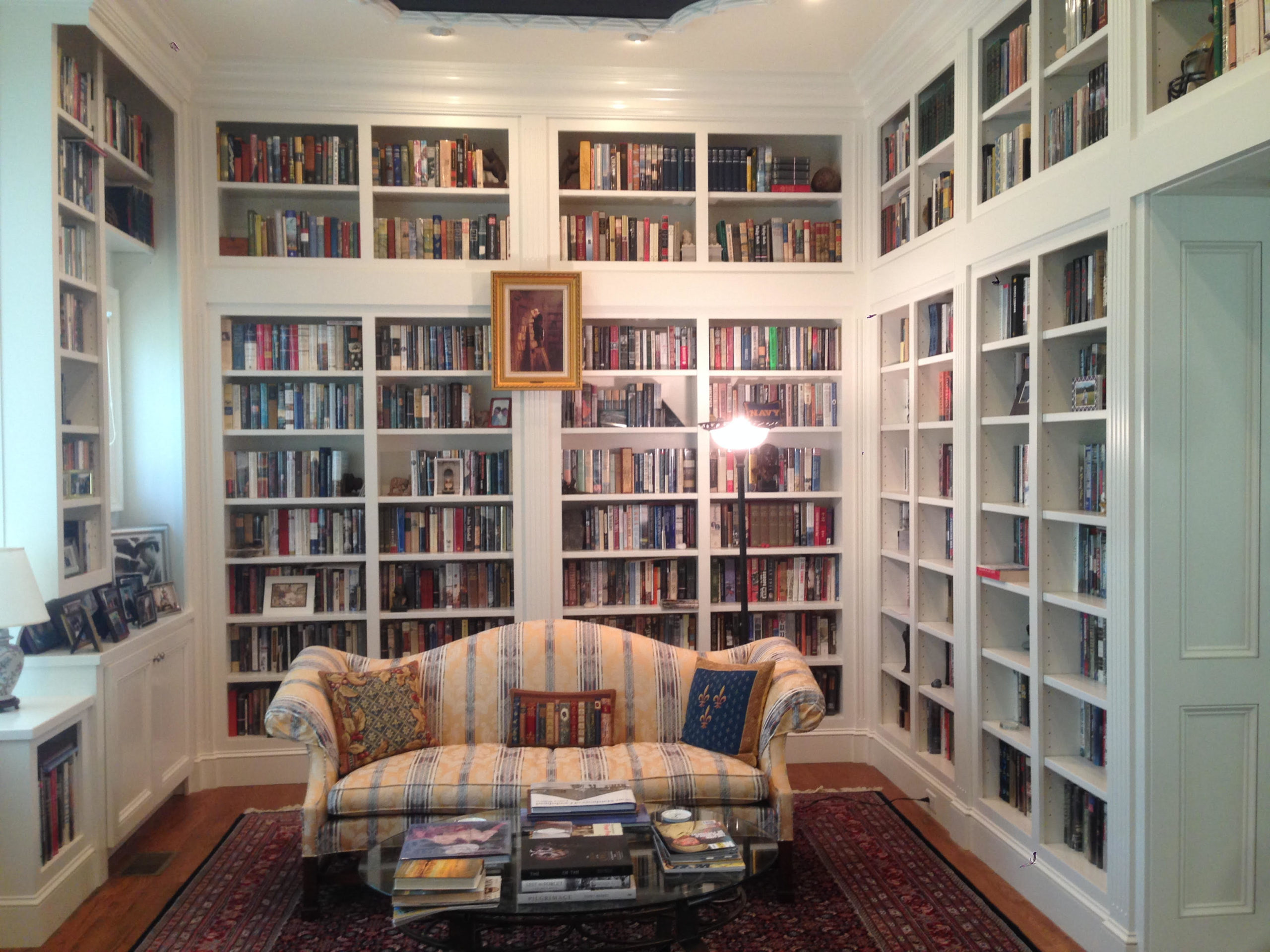
My website currently boasts that I have “almost 5,000 books” at home. I may need to revise it to read: “Tim’s library now exceeds 5,000 books, a good many of which he has personally edited, annotated, and written introductions for.”
Yes, it is well and good that an author can behold the fruits of his labor!