Alfred Nobel
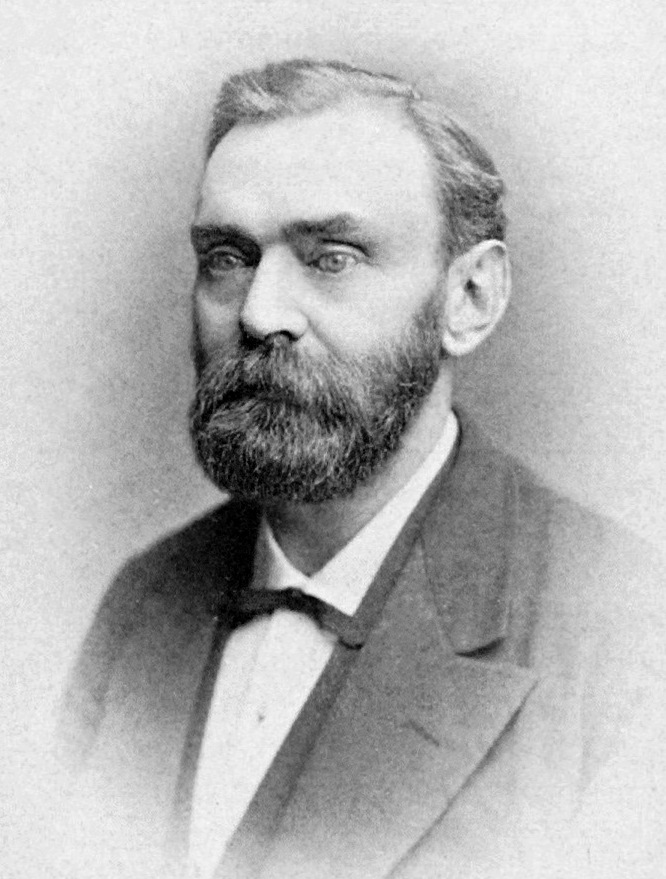
One hundred and twenty-nine years ago today Alfred Nobel died. A brilliant chemist, he followed in the steps of his father, who had run a factory in St. Petersburg building explosive mines. After the end of the Crimean War (1856) young Alfred returned to his native Sweden and opened his own laboratory, experimenting with explosives. Among his many scientific pursuits (he ended up with 355 patents over his lifetime) was the search for a way to handle nitroglycerin, a highly volatile liquid explosive. Ultimately, by combining nitroglycerin with a porous stabilizer he was able to produce a highly explosive mixture that was nevertheless much safer to handle and use.
He called his new invention “dynamite” and history was forever changed.
While Nobel became fabulously wealthy from his new invention (in addition to his many other discoveries and patents) it is also clear that he, who had pacifist leanings, was of two minds regarding the impact of his new invention on the world.
Perhaps in expiation for his lethal discovery, Nobel directed in his will that, upon his death, the majority of his estate (thought to be the largest private fortune in the world) be devoted to the creation of prizes recognizing those who “shall have conferred the greatest benefit upon mankind” in the fields of literature, medicine, chemistry, and physics. In the field of peace, the prize should be awarded “to the person who shall have done the most or the best work for fraternity between nations and the abolition or reduction of standing armies and the formation and promotion of peace conferences.” Interestingly, all but the peace prize were to be chosen by Swedish organizations, whereas the peace prize would be chosen by a committee selected by Norway’s parliament, the Storting. [At the time Norway was still united with Sweden, under the overall direction of a Swedish king.]
Exactly five years after Nobel’s death (December 10, 1901), the first such Nobel Prizes was awarded.
It is doubtful that Odd Nansen paid much attention to all the hoopla attendant on the first Peace Prize ceremony in Oslo (then still known as Christiana). After all, he was only four days old, having arrived in the world on December 6, 1901. On the other hand, it is much more likely that his father, Fridtjof Nansen, was present for the ceremony. After all, by virtue of his famous polar expedition to the North Pole (1893—1896) which had brought him farther north than anyone had ever gone—a record that still stood in 1901—Fridtjof Nansen was probably the most famous person in all of Norway.
What seems less likely was that Fridtjof Nansen in 1901 could have foreseen his own subsequent career as a humanitarian, and his own receipt of the Nobel Peace Prize 21 years later, in 1922. [The Nansen International Office for Refugees, formed after his death to carry on many of his humanitarian works, would also receive a Nobel Peace Prize, in 1938.]
You can be sure that Odd Nansen was at that 1922 ceremony honoring his father, and perhaps from that event he decided to follow in his father’s humanitarian footsteps: forming and running Nansenhjelpen (Nansen Relief) from 1936 to 1939 to help stateless Jewish refugees; exhibiting during the war, in page after page in his concentration camp diary, “how noble and generous the human spirit can be in the face of terrible adversity” (in the words of William L. Shirer); and in his postwar work on behalf of UNESCO.
Yes, Alfred Nobel would have approved.