
“[T]o become a journalist . . . that’s what I want! I know I can write. . . . [M]uch of my diary is vivid and alive. . . . I want to be useful or bring enjoyment to all people, even those I’ve never met. I want to go on living even after my death! And that’s why I’m so grateful to God for having given me this gift, which I can use to develop myself and express all that’s inside me!”
Diary entry by Anne Frank, April 5, 1944
“[M]y greatest wish is to be a journalist, and later, a famous writer. . . . [A]fter the war I’d like to publish a book called The Secret Annex. It remains to be seen whether I’ll succeed, but my diary can serve as the basis.”
Diary entry by Anne Frank, May 11, 1944

Eighty years ago today, Anne Frank, her family, the van Pels family, and Fritz Pfeffer—all the occupants of the secret annex located at Prinsengracht 263, Amsterdam, were arrested by the Gestapo. They had been in hiding since July 6, 1942. To this day no one knows how they were betrayed. Various theories have been, and continue to be, put forth, but nothing definitive has ever been established. It is likely to forever remain a mystery.
Until Anne’s death, approximately seven months later, in Bergen-Belsen, she had led a relatively obscure existence, known only to her extended family, some friends, schoolmates and neighbors.
But Anne kept a diary, and because she did, Anne’s afterlife has been anything but obscure. That diary, which she received as a gift for her 13th birthday, became her ticket to immortality. From a modest press run of 3,036 copies of the first, 1947 Dutch edition, Anne’s diary has now been translated into 70 languages, and well over 35 million copies have been sold. It’s safe to say that Anne’s diary is one of the most widely read books about the Holocaust, and she may well be the best-known victim of the Holocaust.
As to her literary merits, here is what Robert Warshaw, an editor at the Jewish-interest magazine Commentary wrote to Otto Frank: “Let me say again that I have read no document of the Jewish experience in Europe that seemed to me so expressive, so moving, and on so high a literary level as your daughter’s remarkable diary.”
But Anne Frank’s diary might easily have disappeared, or remained obscure, but for the efforts of two other remarkable women: Miep Gies and Judith Jones.
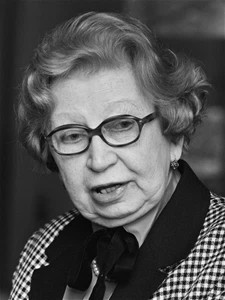
Miep Gies was an employee in Otto Frank’s business, one of four employees who helped hide Anne, her family, and their friends. When Anne was arrested eighty years ago today, her diary, till then stored in her father’s briefcase, was unceremoniously dumped on the floor of the secret annex to free up space for the Gestapo agent, Karl Silberbauer, to cart away the families’ valuables (cash, jewelry, etc.). When the Gestapo and their prisoners had left, Miep (who was not, for some reason, among the arrested), had the presence of mind to visit the annex and survey the scene. She immediately recognized Anne’s work scattered on the floor, quickly gathered it up, and deposited it in her desk drawer for safekeeping until Anne returned.
When it became clear in 1945 that Anne had not survived the concentration camps, Gies gave Anne’s diary to Anne’s father, Otto, who read it and arranged for its publication. In a final stroke of luck, Miep had refused to read through Anne’s papers, feeling it would be an invasion of Anne’s privacy. Only when the diary was published in the Netherlands in 1947 would she consent to read what she had guarded for so long. In doing so she admitted that, had she known the contents of Anne’s work, she would have burned the manuscript “because it would have been too dangerous for people about whom Anne had written.” [Miep Gies died January 11, 2010, five weeks shy of her 101st birthday.]
So Miep Gies was instrumental, unwittingly perhaps, in saving Anne’s diary. Now it needed publicity. A few modest print runs in various European translations had begun to be published in the late 1940s and early 1950s.
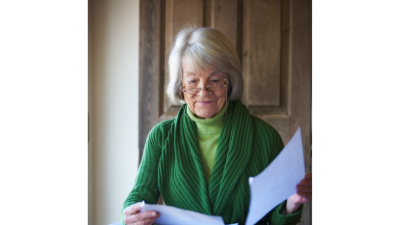
At that time Judith Jones was working as a young assistant in the Paris office of Doubleday. One day the director of Doubleday’s foreign bureau, Frank Price, headed off to lunch, leaving Judith to prepare rejections for a pile of submissions. As she was going through the pile she came across a picture of Anne on the cover of an advance copy of the French edition of her diary. That picture intrigued her.
“I read it [the diary] all day,” she noted. “When my boss returned, I told him ‘We have to publish this book.’ He said, ‘What? That book by that kid?’” Judith persuaded Price to allow her to get the book off to Doubleday in New York urging them to publish it. “I made that book quite important because I was so taken with it, and I felt it would have a great market in America. It’s one of those seminal works that will never be forgotten.” [Judith Jones later became senior editor and vice president of Alfred A. Knopf. She died August 2, 2017, age 93.]
And Judith was right. Following an enthusiastic review in The New York Times Book Review, the diary went through printing after printing, and Anne’s reputation was set.
Anne’s Frank’s dairy is indeed one of those seminal works that will never be forgotten. But it took the combined efforts of three remarkable women: Anne its creator, Miep its guardian, and Judith its publicist. So, while we remember the anniversary of Anne’s tragic arrest, let us also remember, and honor, the actions of three remarkable women.
“Of all the multitudes who throughout history have spoken for human dignity in times of great suffering and loss, no voice is more compelling than that of Anne Frank.”
Remarks by President John F. Kennedy, 1961.

